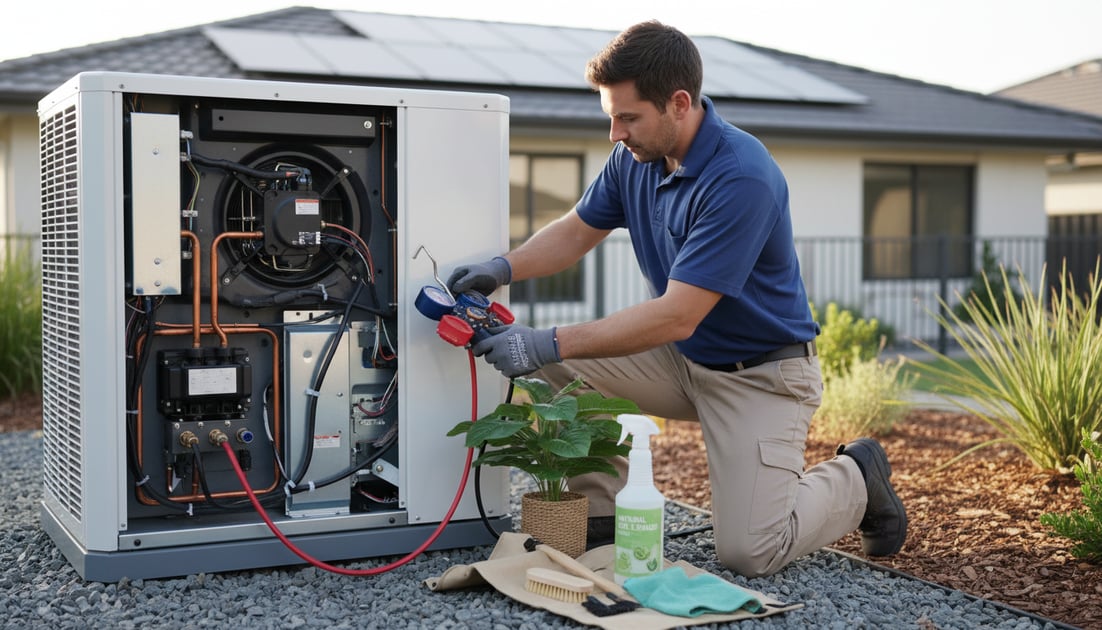
Sustainable HVAC systems: A 2026 installation guide for UK businesses
By Be Cool Air Conditioning 12 min read
Why UK Businesses Are Switching to Sustainable HVAC in 2026
The clock's ticking on outdated commercial HVAC systems. With transmission network charges forecast to jump from £5.1 billion to £8.9 billion in 2026/27, energy costs are squeezing profit margins harder than ever. Commercial premises across the South East face the steepest increases, making energy efficiency a survival issue rather than a nice-to-have upgrade.
The regulatory landscape is shifting too. New Energy Performance Certificate metrics roll out from October 2026, and businesses know stricter compliance requirements are coming. The UK commercial HVAC market is growing at 7.26% annually as companies race to future-proof their operations before deadlines bite.
Here's the reality: manufacturers currently run gas systems at just 24% utilisation, revealing massive potential for heat pump installations that match actual demand. Government grants of £7,500 are sweetening the deal, but the real driver is long-term savings. Businesses that switch to sustainable HVAC systems now lock in predictable energy costs whilst competitors gamble on volatile fossil fuel prices.
Be Cool Air Conditioning sees this urgency firsthand – commercial clients are prioritising system installation timelines to avoid the 2026 rush. Smart businesses aren't waiting for mandates. They're implementing energy-efficient solutions today because the payback period keeps shrinking as traditional energy costs climb.
What is the Most Sustainable HVAC System?
The most sustainable HVAC system depends on your building type, existing infrastructure, and operational hours – but heat pumps consistently deliver the highest energy efficiency for UK commercial premises. Air-source heat pumps achieve 300-400% efficiency by transferring ambient heat rather than burning fossil fuels, making them the frontrunner for businesses targeting net-zero goals.
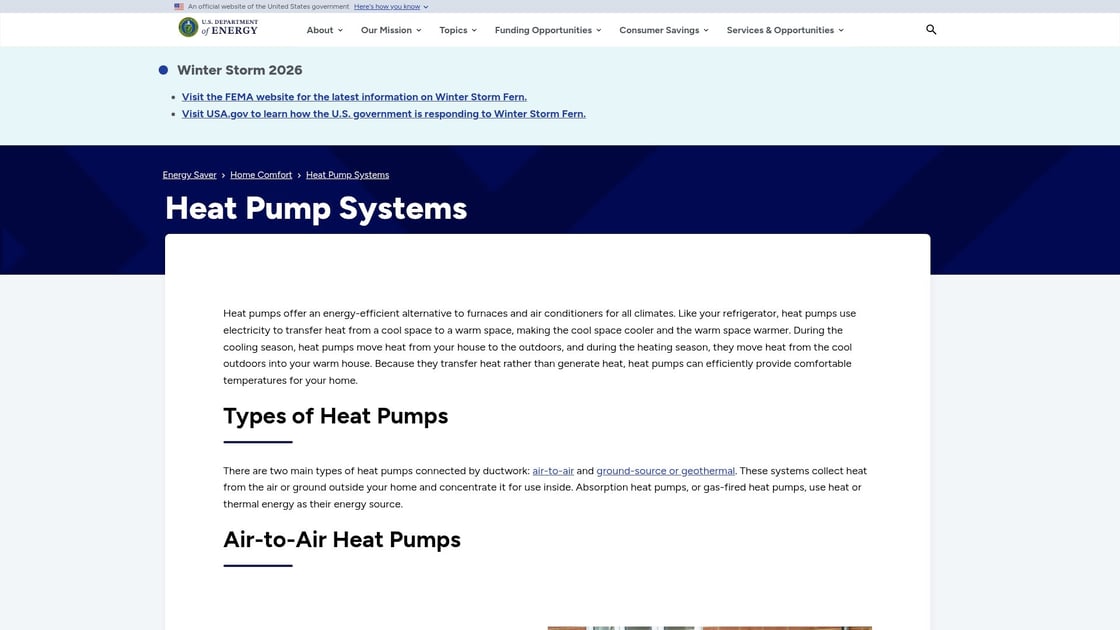
The UK targets 450,000 annual heat pump installations by 2030, signalling where the market's heading. But sustainability isn't one-size-fits-all. Here's how the leading commercial HVAC systems stack up:
| System Type | Energy Efficiency | Installation Cost | Best For | Maintenance Needs |
|---|---|---|---|---|
| Air-Source Heat Pump | 300-400% COP | £8,000-£18,000 | Most commercial buildings, retrofit projects | Annual servicing, refrigerant checks |
| Ground-Source Heat Pump | 400-500% COP | £20,000-£45,000 | Large sites with land availability | Minimal after installation |
| MVHR (Mechanical Ventilation with Heat Recovery) | 85-95% heat recovery | £3,000-£8,000 | Airtight modern builds, offices | Filter changes every 6 months |
| Integrated Solar Thermal + Heat Pump | 500%+ combined | £15,000-£30,000 | High hot water demand, warehouses | Dual system checks required |
Ground-source systems win on pure efficiency, but the upfront costs and land requirements rule them out for urban businesses. MVHR excels in new-builds where you're controlling ventilation from scratch, recovering waste heat that would otherwise escape.
Be Cool Air Conditioning recommends evaluating your EPC rating first – buildings below a C rating often need fabric improvements before any HVAC upgrade delivers maximum returns. The £7,500 government grants make heat pumps the most accessible sustainable option right now, especially when paired with LED lighting upgrades and battery storage to smooth demand peaks.
The reality? Most businesses benefit from hybrid approaches. Combining air-source heat pumps with existing gas boilers during transition periods maintains comfort whilst building operational confidence. You're not locked into a single technology – sustainable HVAC systems evolve as your energy strategy matures and solar panels or electric vehicle charging join your air conditioning installation roadmap.
Is HVAC in Demand in the UK?
HVAC demand is surging across the UK, driven by regulatory deadlines and businesses scrambling to avoid obsolescence. The European HVAC equipment market is growing at 5.5% year-on-year from 2025 to 2026, with the UK representing a key growth driver as commercial premises face mounting pressure to upgrade ageing systems.
The real catalyst? EPC Band B compliance. Non-domestic private rented properties must hit EPC Band B by 2030 under proposed Minimum Energy Efficiency Standards, and you can't achieve that rating without addressing your HVAC systems. Most older installations simply can't deliver the energy efficiency metrics required, forcing wholesale replacements rather than incremental improvements.
Here's what's changing the landscape. Europe's HVAC market is projected to grow by USD 12.8 billion at a 6% compound annual growth rate through 2030, signalling sustained demand rather than a temporary spike. UK businesses are shifting from traditional gas boilers to heat pump installations, with government grants making the transition financially viable for companies that act now.
The demand isn't just about compliance – it's about survival. Energy costs keep climbing, and businesses running inefficient HVAC systems are haemorrhaging money on operational expenses. System installation timelines are stretching as demand outpaces installer availability, meaning companies that delay upgrades risk missing regulatory deadlines and paying premium rates for rushed jobs. Smart businesses are booking energy-efficient solutions today, locking in predictable costs whilst competitors wait and hope for cheaper alternatives that won't materialise.
Are Heat Pumps Going to Be Compulsory in the UK?
Heat pumps aren't compulsory for UK commercial premises – there's no government mandate forcing businesses to install them. The £7,500 grant available under the Boiler Upgrade Scheme is an incentive, not a requirement, designed to encourage voluntary uptake rather than enforce compliance.
But here's the reality: regulatory pressure makes heat pumps increasingly unavoidable for certain businesses. Commercial EPCs will continue measuring carbon emissions as their primary metric from 2026, and you can't dramatically improve that rating without switching away from fossil fuel systems. Whilst there's no confirmed MEES requirement mandating EPC Band C for commercial rented properties yet, the direction of travel is clear – energy efficiency standards are tightening, not loosening.
Heat pumps make commercial sense when you're facing an HVAC upgrade anyway. If your existing system is nearing end-of-life, the £7,500 grant tips the financial balance towards heat pump installations over like-for-like gas boiler replacements. The government's target of 450,000 annual heat pump installations by 2030 signals where infrastructure investment and technical support will concentrate.
The compulsory question misses the point. You're not legally forced to install heat pumps today, but businesses that ignore energy-efficient HVAC commercial systems face higher operational costs, declining EPC ratings, and potential compliance issues down the line. Be Cool Air Conditioning advises evaluating heat pumps alongside other sustainable options – solar panels, battery storage, and LED lighting – to determine which combination delivers the strongest ROI for your specific premises and usage patterns.
Complete HVAC Systems Installation Guide for UK Businesses
Installing HVAC systems in commercial premises requires careful planning to avoid costly delays and business disruption. The UK Building Automation Systems market is growing at 13.4% annually through 2030, with over 60% of new installations featuring smart connectivity – making proper integration critical from day one.
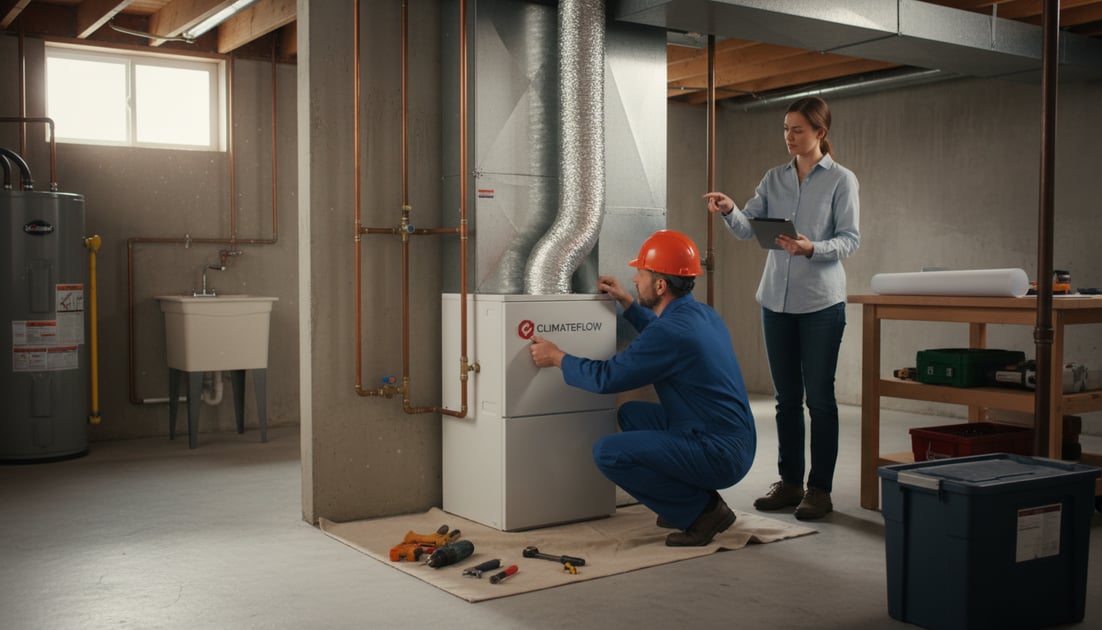
Step 1: Assess Planning Permission Requirements
Check permitted development rules before ordering equipment. Outdoor heat pump units must not exceed 0.6 cubic metres for flats or 1.5 cubic metres for houses, and external units require at least 1 metre clearance from property boundaries. Conservation areas and listed buildings need full planning permission regardless of system size. Submit applications 8-12 weeks before your planned installation date to avoid timeline slippage.
Step 2: Calculate System Sizing Accurately
Undersized systems struggle during peak demand whilst oversized units waste energy cycling on and off. Commission a heat loss calculation that factors in building fabric, occupancy patterns, and operational hours. Commercial premises typically require 80-120 watts per square metre for heat pump installations, but warehouses with high ceilings need different calculations than insulated office spaces.
Step 3: Plan BMS Integration Early
Modern HVAC systems must communicate with your Building Management System to optimise energy efficiency and enable remote monitoring. Specify BACnet or Modbus protocols during procurement – retrofitting connectivity costs significantly more than building it in from the start. Air conditioning services that include BMS integration deliver 15-25% better energy performance than standalone installations.
Step 4: Schedule Installation to Minimise Disruption
Most commercial HVAC systems installation takes 3-7 days depending on complexity. Book work during quieter trading periods or split the project across multiple weekends. Phased installations allow you to maintain partial climate control whilst upgrading different zones, preventing total system shutdowns that disrupt operations.
Step 5: Commission and Test Thoroughly
Demand comprehensive commissioning that verifies refrigerant pressures, airflow rates, and control sequences. Be Cool Air Conditioning insists on 48-hour monitoring periods after commercial installations to catch integration issues before handover. Test emergency scenarios and confirm your team understands the new controls – proper training prevents panicked callouts when settings need adjustment.
System installation timelines are stretching as demand grows, so secure your slot early. Businesses that rush through planning face expensive remedial work when systems underperform or fail compliance checks.
6 Ways Sustainable HVAC Systems Drive Cost Savings and Carbon Reduction
Sustainable HVAC systems deliver measurable returns that extend far beyond lower energy bills. Businesses switching to energy-efficient installations see payback periods shrinking as fossil fuel prices climb, whilst carbon reduction targets become achievable rather than aspirational.
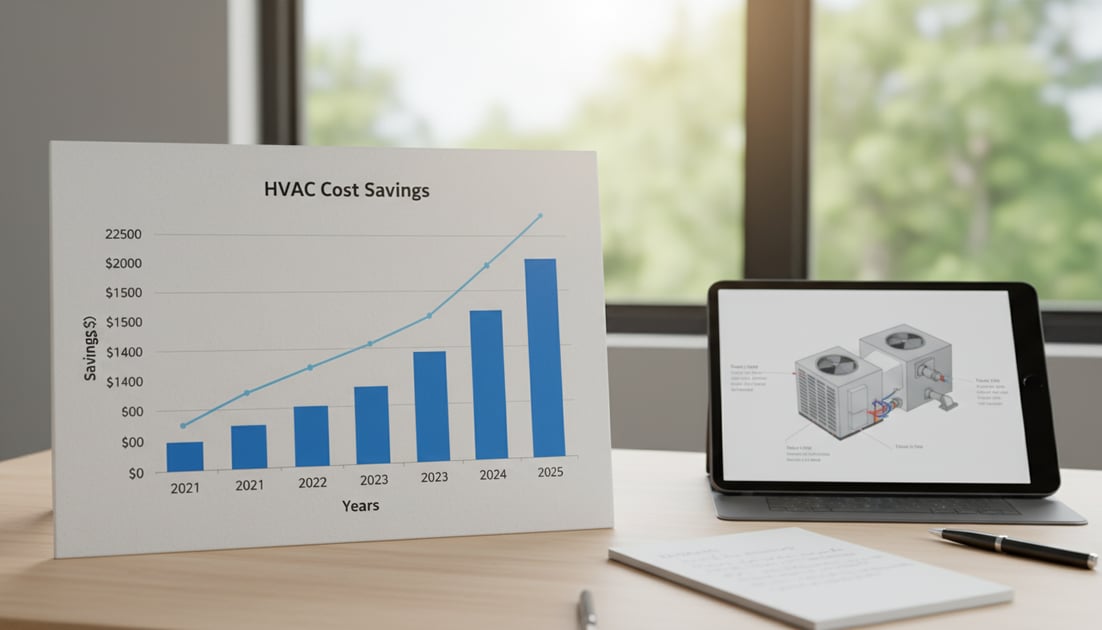
1. Energy Efficiency Slashes Operational Costs – Heat pump installations achieve 300-400% efficiency compared to 90% for traditional gas boilers, meaning you extract three to four units of heat for every unit of electricity consumed. Hounslow Council cut heating bills by 53% after replacing gas systems with air-source heat pumps in June 2025. That's real money returning to your bottom line every quarter.
2. Renewable Heat Incentive Grants Reduce Capital Outlay – The £7,500 Boiler Upgrade Scheme grant directly offsets installation costs, making heat pump projects financially viable today rather than aspirational goals. You're not waiting for technology to become affordable – government funding bridges the gap now.
3. Smart Export Guarantee Creates New Revenue Streams – Businesses combining solar panels with battery storage can export surplus energy back to the grid. Smart Export Guarantee payments jumped 86% from £30.7 million in 2023-24 to £56.97 million in 2024-25, proving renewable generation creates income opportunities beyond consumption savings.
4. Extended Equipment Lifespan Reduces Replacement Cycles – Heat pumps typically last 20-25 years compared to 10-15 years for gas boilers. You're spreading capital costs across longer timeframes, reducing the frequency of disruptive system replacements that impact business operations.
5. Predictive Maintenance Prevents Costly Breakdowns – Modern HVAC systems with BMS integration enable predictive maintenance that reduces equipment downtime by up to 25%. Be Cool Air Conditioning schedules proactive air conditioning repair based on performance data rather than waiting for failures that halt operations during peak trading periods.
6. Improved EPC Ratings Boost Property Values – Commercial premises with Band B or higher EPC ratings command rental premiums and attract quality tenants. Sustainable HVAC upgrades directly improve your carbon metrics, making properties compliance-ready whilst enhancing asset values for future sales or refinancing.
HVAC Systems Maintenance: Protecting Your Investment
HVAC systems maintenance is the difference between a 20-year asset and an expensive liability that fails during peak demand. Proper preventative maintenance extends equipment lifespan by 40-60%, protecting the capital investment you've just made in sustainable heating solutions whilst maintaining the energy efficiency that justified the upgrade.
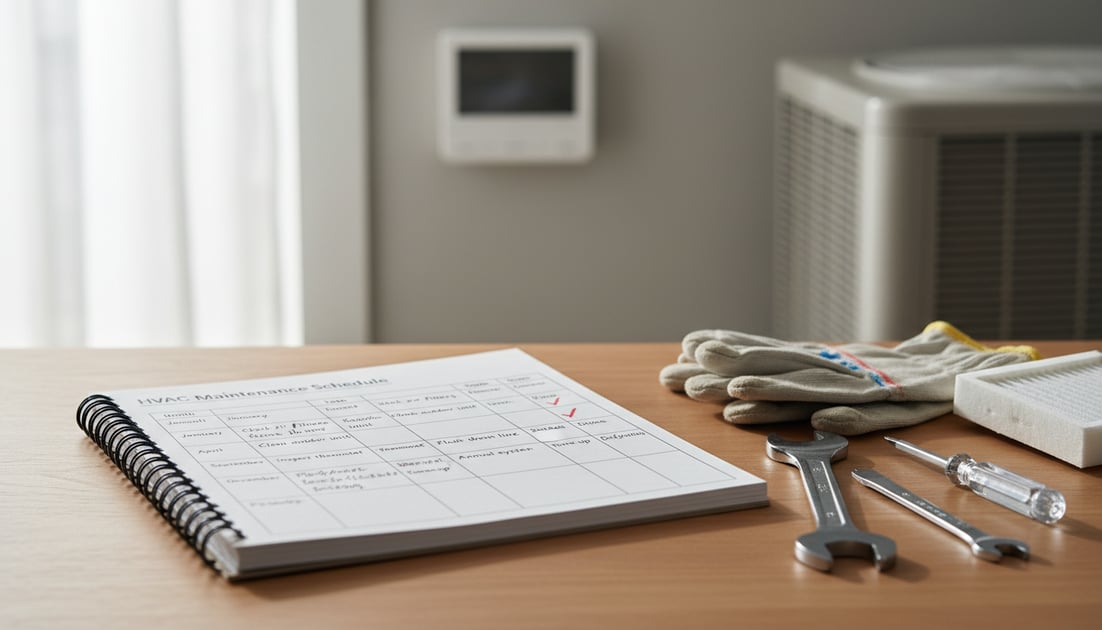
UK businesses face clear legal compliance requirements. Commercial air conditioning systems over 12kW require TM44 inspections every five years, and from January 2026, all new commercial refrigeration equipment must use A2L low-GWP refrigerants. You're not just maintaining performance – you're avoiding penalties for non-compliance.
Heat pump installations demand different maintenance schedules than traditional gas boilers. Annual servicing should verify refrigerant pressures, check electrical connections, and clean air filters that directly impact efficiency. Ground-source heat pumps achieve COP ratings of 3-4 when properly maintained, but neglected systems lose 15-25% efficiency within three years as components degrade.
Be Cool Air Conditioning recommends quarterly inspections for commercial premises running HVAC systems continuously. That frequency catches minor issues before they escalate into costly emergency repairs that disrupt operations. Battery storage and solar panels integrated with your system installation require coordinated maintenance schedules – you're optimising an ecosystem, not isolated components.
The reality? Preventative maintenance costs 30-50% less than reactive repairs. Businesses that schedule regular servicing protect their investment whilst maintaining the energy efficiency metrics needed for EPC rating compliance and long-term savings.
How to Start a HVAC Business in the UK
Starting an HVAC business in the UK requires specific qualifications, regulatory compliance, and proper insurance coverage before you can legally operate. The HVAC sector is growing at 7.26% annually, creating opportunities for qualified engineers who navigate the setup requirements correctly.
1. Obtain F-Gas Certification – You must hold valid F-Gas qualifications to handle refrigerants in air conditioning and heat pump installations. Category I certification covers installation, maintenance, and servicing of stationary refrigeration and air conditioning equipment. Without this certification, you cannot legally work on HVAC commercial systems containing fluorinated greenhouse gases.
2. Secure Professional Qualifications – NVQ Level 2 or 3 in Refrigeration and Air Conditioning forms the foundation, typically paired with City & Guilds certifications. Most commercial clients expect engineers to demonstrate competency through recognised credentials before awarding contracts.
3. Arrange Comprehensive Insurance – Public liability insurance (minimum £5 million cover) protects against property damage and injury claims during system installation. Professional indemnity insurance covers design errors and advice, whilst employers' liability becomes mandatory once you hire staff.
4. Register Your Business and Certifications – Register with HMRC for tax purposes and obtain Gas Safe registration if working on gas boilers alongside heat pump installations. Join a competent person scheme like REFCOM to self-certify compliance work and avoid local authority building control fees on every job.
The regulatory landscape keeps tightening. All new boilers must be hydrogen-ready within 18 months under UK mandates from 2026, meaning your technical knowledge needs constant updating to maintain compliance and competitive advantage.
Making the Switch to Sustainable HVAC in 2026
Switching to sustainable HVAC systems in 2026 comes down to three decision factors: regulatory compliance, long-term savings, and installation availability. EPC Band B requirements are tightening, and businesses waiting until deadlines hit will face stretched timelines and premium pricing as installer capacity maxes out.
The financial case is clear. Heat pump installations achieve 300-400% efficiency whilst government grants of £7,500 offset capital costs today. Businesses that delay gamble on volatile fossil fuel prices instead of locking in predictable energy costs through energy-efficient solutions.
Start by evaluating your current EPC rating – buildings below Band C often need fabric improvements before any HVAC upgrade delivers maximum returns. Consider hybrid approaches that combine heat pumps with solar panels and battery storage to smooth demand peaks and create revenue through Smart Export Guarantee payments.
Be Cool Air Conditioning helps businesses navigate system installation timelines and compliance requirements, ensuring your sustainable HVAC upgrade meets both regulatory standards and operational needs. Don't wait for mandates to force rushed decisions. Contact us today to secure your installation slot and future-proof your commercial premises before the 2026 rush.
Frequently Asked Questions
What is the most sustainable HVAC system?
Geothermal heating systems are considered the most eco-friendly HVAC systems around. This is because they use the Earth's stable underground temperature, instead of relying on fossil fuels, to provide efficient heating and cooling.
Is HVAC in demand in the UK?
The UK HVAC market is experiencing robust growth, driven by increasing demand across sectors and a projected compound annual growth rate (CAGR) of 3.8% through 2030. Key drivers of this growth include government-backed initiatives, as well as the UK's commitment to net-zero emissions by 2050.
Are heat pumps going to be compulsory in the UK?
In summary, heat pumps are set to become compulsory for new UK homes from 2025 under the Future Homes Standard. For existing homeowners, there is no current requirement to switch to a heat pump, but the government is offering significant incentives to encourage voluntary adoption.
How to start a HVAC business in the UK?
Step 1: Acquire the Necessary Skills and Certification.
Step 2: Create a Solid Business Plan.
Step 3: Register Your Business and Handle Legal Requirements.
Step 4: Budget Startup and Running Costs Wisely.