Energy efficient cooling systems: Your 2026 installation guide
By Be Cool Air Conditioning 12 min read
Why 2026 Is the Year to Upgrade Your Cooling System
The regulations have shifted. From October 2026, new domestic Energy Performance Certificates (EPCs) will include a dedicated heating system metric, fundamentally changing how your home's efficiency gets assessed. This isn't just paperwork – it's a signal that outdated cooling systems will directly impact property valuations and running costs.
Government grants of up to £7,500 are currently available for heat pump installations, with the Warm Homes Plan projecting £600 annual bill reductions for participating households. Retrofit installations now command 60.65% of UK HVAC market revenues, proving that upgrading existing systems has become the priority over new builds.
The technology itself has matured. Modern cooling systems integrate Internet of Things (IoT) controls and smart automation that older units simply can't match. You're not just replacing equipment – you're investing in platforms that adapt to your usage patterns and deliver measurable energy savings.
This guide walks you through everything from installation costs and regional climate considerations to heat pump reliability data and government scheme eligibility. Be Cool Air Conditioning has compiled the essential information you need to make an informed decision before the regulatory landscape changes further.
Understanding Modern Cooling Systems: Heat Pumps vs Traditional Air Conditioning
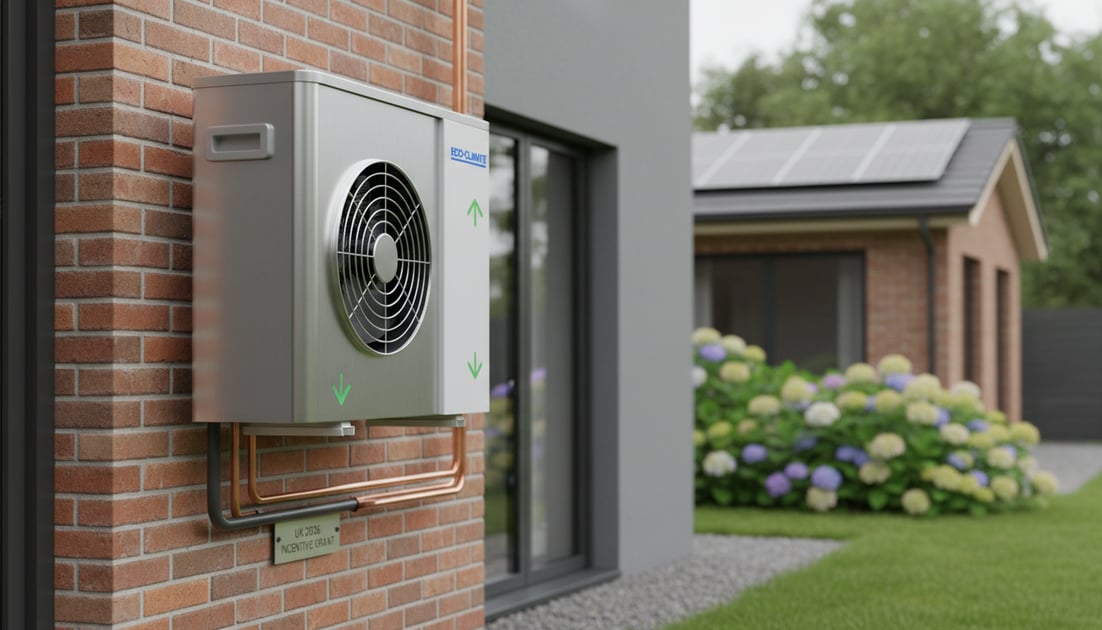
A heat pump is a reversible system that moves thermal energy in both directions – cooling your home in summer and heating it in winter – whilst traditional air conditioning only provides a cooling function. This fundamental difference explains why heat pumps now dominate the UK's retrofit market, particularly as government schemes prioritise dual-purpose installations.
The efficiency gap is substantial. Heat pumps achieve up to 500% efficiency, producing 5 kW of thermal output for every 1 kW of electricity consumed. Traditional air conditioning systems operate at lower coefficients, typically managing 250-350% efficiency purely for cooling. When you factor in running costs over a typical 15-year lifespan, the savings compound significantly.
Installation cost remains the primary barrier. An air-source heat pump system averages £8,000-£14,000 installed, though the Boiler Upgrade Scheme reduces this by £7,500. Standard air conditioning units cost £2,500-£5,000 for comparable coverage but won't heat your property or qualify for grants. Be Cool Air Conditioning advises clients to calculate payback periods based on their specific usage patterns rather than upfront costs alone.
| Feature | Heat Pump | Traditional AC |
|---|---|---|
| Cooling function | Yes | Yes |
| Heating capability | Yes | No |
| Efficiency (cooling) | 400-500% | 250-350% |
| Installation cost | £8,000-£14,000 | £2,500-£5,000 |
| Government grants | Up to £7,500 | None |
| Running costs (annual) | £400-£600 | £500-£800 |
Your home insulation determines which system performs optimally. Heat pumps require well-insulated properties to maintain efficiency during heating cycles, whilst air conditioning tolerates poorer thermal envelopes. Ground-source heat pump installations offer even greater energy savings but command £15,000-£25,000 budgets. The choice ultimately depends on whether you need year-round climate control or summer-only relief.
How Heat Pump Cooling Systems Work in UK Climate Conditions
Heat pumps extract thermal energy from outdoor air or ground sources and transfer it indoors during heating mode, then reverse the refrigerant flow for cooling – a process measured by the Coefficient of Performance (COP). A COP of 4 means you receive 4 kW of heating or cooling for every 1 kW of electricity consumed, making this metric essential for calculating your running costs.
UK climate zones present distinct performance profiles. HeatPumpMonitor.org reports an average Seasonal Performance Factor (SPF) of 3.86 across 594 UK installations as of November 2025, demonstrating real-world efficiency that translates to approximately £400-£600 annual electricity costs for typical homes. Southern England's milder winters allow air-source heat pumps to maintain COPs of 2.5-3 even in sub-zero temperatures, whilst Scotland's colder climate often justifies ground-source heat pump installations that deliver stable performance regardless of ambient conditions.
The cooling function operates identically across regions, extracting indoor heat and expelling it outside. Your home insulation directly impacts efficiency – poorly insulated properties force the compressor to work harder, reducing COP and increasing electricity costs. High-temperature heat pumps achieve COPs between 3 and 4 with Seasonal COPs above 3.5 in UK conditions, outperforming traditional systems year-round.
Regional considerations matter. Coastal areas benefit from moderate temperatures that optimise air-source performance, whilst inland properties with temperature extremes see greater energy savings from ground-source installations. Be Cool Air Conditioning evaluates site-specific climate data during assessments to recommend systems that maximise your COP ratings and minimise long-term running costs.
5 Key Benefits of Energy-Efficient Cooling in 2026
Energy-efficient cooling systems deliver measurable advantages that extend beyond comfort. Here's what you gain when upgrading to modern platforms.
1. Substantial Annual Savings on Energy Bills
Modern heat pumps reduce your heating and cooling costs dramatically. The Energy Saving Trust estimates £260 annual savings when replacing old inefficient gas boilers with air-source systems in typical 3-bed semi-detached homes. Some households see even greater reductions – research from E3G shows potential bill drops from £820 to £375 yearly, saving £445. Your actual savings depend on your current system's efficiency and usage patterns, but the financial case strengthens as electricity prices stabilise and fossil fuel costs climb.
2. Significant Carbon Emissions Reductions
Switching to energy-efficient cooling systems cuts your carbon footprint immediately. Heat pumps reduce CO2 emissions by approximately 1,800 kg annually when replacing gas boilers, according to Energy Saving Trust data. That's equivalent to driving 7,200 fewer miles each year. The UK's grid continues decarbonising, meaning your heat pump's environmental benefit increases over time without any additional investment from you.
3. Smart Thermostat Integration and IoT Controls
Contemporary cooling systems connect to Internet of Things (IoT) platforms that learn your preferences and optimise performance automatically. Smart thermostats adjust temperatures based on occupancy, weather forecasts, and electricity pricing – delivering 15-30% additional energy savings beyond the system's base efficiency. You control everything remotely through smartphone apps, eliminating wasted cooling when you're away.
4. Future-Proof Compliance with Building Regulations
The October 2026 EPC changes make heating system efficiency a standalone metric. Installing energy-efficient cooling now positions your property ahead of regulatory requirements, protecting resale values and avoiding rushed upgrades later. Government schemes currently subsidise installations with up to £7,500 grants, but this funding won't last indefinitely.
5. Year-Round Climate Control from Single Installation
Unlike traditional air conditioning that only cools, heat pumps provide both heating and cooling functions from one system. This dual capability eliminates the installation cost and running costs of separate equipment. Be Cool Air Conditioning installs AC installation services that deliver comprehensive climate control, reducing complexity whilst maximising energy savings across all seasons.
Installation Costs and Available UK Government Grants
The upfront investment varies significantly based on system type and property requirements. Air-source heat pump installations typically range from £8,000 to £14,000, whilst ground-source systems command £15,000 to £25,000 due to excavation work. Traditional air conditioning units cost £2,500 to £5,000 but won't qualify for government funding or provide heating capability.
The Boiler Upgrade Scheme transforms these numbers dramatically. You can claim £7,500 towards air-source heat pumps or £7,500 for ground-source installations, reducing your actual outlay to as little as £500 for entry-level systems. The scheme applies to properties in England and Wales, with applications processed through MCS-certified installers who handle the paperwork directly.

Eligibility requirements are straightforward. Your property must have a valid EPC, you can't already have a heat pump installed, and the system must replace fossil fuel heating. The government scheme doesn't cover homes built after 2023 or properties receiving other heat pump grants simultaneously. Be Cool Air Conditioning assesses eligibility during initial consultations, ensuring you maximise available funding before installation begins.
| Cost Component | Air-Source Heat Pump | Ground-Source Heat Pump | Traditional AC |
|---|---|---|---|
| Base installation cost | £8,000-£14,000 | £15,000-£25,000 | £2,500-£5,000 |
| Government scheme grant | £7,500 | £7,500 | £0 |
| Net installation cost | £500-£6,500 | £7,500-£17,500 | £2,500-£5,000 |
| Annual running costs | £400-£600 | £350-£500 | £500-£800 |
| Payback period | 3-5 years | 7-10 years | N/A |
Additional costs include smart controls (£200-£400), radiator upgrades for optimal performance (£300-£600 per room), and potential electrical system modifications (£500-£1,500). Factor these into your budget alongside the base installation cost. The energy savings compound year after year, with most households recovering their investment within five years even after accounting for air conditioning services maintenance requirements.
Step-by-Step: What to Expect During Installation
The installation process follows a structured sequence that typically spans 3-5 days for air-source systems and 1-2 weeks for ground-source installations. Understanding each phase helps you prepare your property and minimise disruption.
Step 1: Initial Survey and System Design
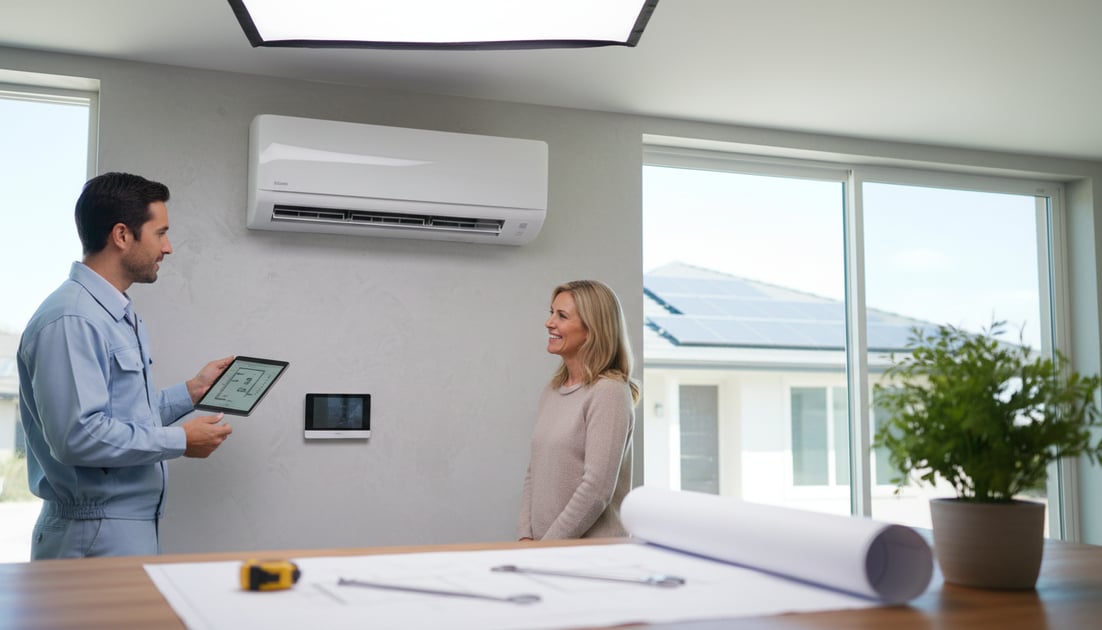
Your MCS-certified installer conducts a comprehensive property assessment, measuring room dimensions, evaluating home insulation quality, and calculating heat loss. This survey determines the correct system capacity – undersized units struggle in cold weather whilst oversized installations waste energy and increase running costs. Expect 2-3 hours on-site with detailed questions about your heating system usage patterns.
Step 2: Pre-Installation Preparation
The installer coordinates government scheme applications through the Boiler Upgrade Scheme portal if you're claiming the £7,500 grant. You'll receive a fixed-price quote covering equipment, labour, and any necessary upgrades to radiators or electrical systems. Clear the outdoor installation area and ensure engineers can access your existing heating system. Most homeowners complete this phase within 1-2 weeks.
Step 3: Outdoor Unit and Indoor Component Installation
Engineers mount the outdoor heat pump unit on a concrete base or wall brackets, then connect refrigerant pipework to indoor components. Air-source installations typically complete in 1-2 days, whilst ground-source systems require excavation for ground loops – adding 3-5 days depending on soil conditions. Your existing heating system remains operational until the final connection phase.
Step 4: System Commissioning and Smart Controls Setup
Technicians pressurise the refrigerant circuit, test all connections, and configure Internet of Things (IoT) controls to optimise performance. Be Cool Air Conditioning programmes smart thermostats during this phase, demonstrating remote controls and scheduling features that maximise energy savings. The commissioning process takes 4-6 hours and includes performance verification against design specifications.
Step 5: Handover and Post-Installation Support
You receive operation training covering seasonal adjustments, maintenance schedules, and troubleshooting guidance. The installer registers your system with the manufacturer for warranty activation and submits final paperwork for government scheme payment. Most companies offer air conditioning repair support and annual servicing to maintain efficiency throughout the system's 15-20 year lifespan.
Hybrid Systems and Smart Integration for Maximum Efficiency
A hybrid system combines your existing gas boiler with an air-source heat pump, switching automatically between fuel sources based on outdoor temperature and electricity pricing. This approach addresses the primary reliability concern homeowners express – you retain backup heating if the heat pump encounters issues whilst still capturing substantial energy savings during milder weather.
The numbers support this pragmatic strategy. Approximately 35% of UK heating engineers now install hybrid configurations alongside standalone heat pumps, recognising that many properties can't justify full boiler replacement. Your hybrid system runs the heat pump when outdoor temperatures exceed 0-5°C (where COPs remain above 3), then switches to gas heating during extreme cold snaps. Running costs typically fall 30-40% compared to gas-only systems, though you won't achieve the 60-70% reductions possible with dedicated heat pump installations.
Internet of Things (IoT) integration transforms these platforms from passive equipment into adaptive systems. Smart controls like Vaillant's iQconnect monitor performance continuously, detecting potential faults before they cause failures and adjusting operation based on weather forecasts. You receive alerts when efficiency drops below expected levels, addressing the long-term performance anxiety that dominates consumer discussions on community platforms.
The commercial heating and cooling systems sector demonstrates this reliability advantage clearly. Building Management Systems (BMS) track real-time COP data across multiple zones, proving that properly maintained heat pumps deliver consistent performance over 15-20 year lifespans. Be Cool Air Conditioning configures IoT platforms during installation, establishing baseline performance metrics that validate your system operates within manufacturer specifications. This data-driven approach provides the peer validation homeowners seek – concrete evidence your investment performs as promised rather than anecdotal experiences alone.
Essential Components and Placement Considerations
Modern cooling systems comprise four essential components that work together to transfer thermal energy efficiently. Understanding these elements helps you identify quality installations and troubleshoot performance issues.
1. Compressor and Refrigerant Circuit – The compressor pressurises refrigerant gas, raising its temperature before circulating it through the system. This component accounts for 60-70% of your running costs, making efficiency ratings critical. Industrial cooling systems use scroll or screw compressors rated above 20 kW, whilst residential units typically operate at 5-20 kW – the capacity range that captured 31.62% of the UK HVAC market in 2025.
2. Heat Exchangers (Evaporator and Condenser) – These copper or aluminium coils facilitate thermal transfer between refrigerant and air. The outdoor unit houses the condenser that expels heat during cooling mode, whilst the indoor evaporator absorbs warmth from your rooms. Fin spacing and coil surface area directly impact your system's Coefficient of Performance.
3. Expansion Valve and Control Systems – The expansion valve regulates refrigerant flow, maintaining optimal pressure differentials. Smart controls integrate with Internet of Things (IoT) platforms, adjusting operation based on occupancy and weather forecasts to maximise energy savings.
4. Noise Management and Strategic Placement – Residential heat pumps operate at 45-60 dB, comparable to a dishwasher. MCS 020 regulations limit noise to below 42 dB at your neighbour's window. Position outdoor units at least 1 metre from boundaries where possible, though England removed this mandatory requirement in early 2026. Be Cool Air Conditioning conducts acoustic assessments during site surveys, identifying locations that minimise sound transmission whilst maintaining airflow efficiency and simplifying maintenance access.
Finding MCS-Certified Installers and Ensuring Quality
The Microgeneration Certification Scheme (MCS) operates as the sole certification body for heat pump installations under the Clean Heat Market Mechanism, meaning only MCS-certified installers can process your Boiler Upgrade Scheme application and secure the £7,500 grant. This isn't optional bureaucracy – it's your guarantee that engineers follow standardised installation protocols and maintain insurance coverage for 15-20 year system lifespans.

Verify credentials directly through the MCS database before committing to any installer. The Climate Change Committee projects demand for 40,200 active heat pump installers by 2030, yet current workforce numbers lag significantly – creating pressure for rushed installations from under-qualified contractors. Request evidence of completed projects, ask for customer references, and confirm the installer carries professional indemnity insurance covering heat pump work specifically.
Be Cool Air Conditioning maintains MCS certification across all engineering teams, conducting annual audits that verify compliance with evolving standards. Quality installations include comprehensive commissioning reports, performance baseline measurements, and clear documentation of your system's expected COP ratings under various conditions. You deserve concrete performance data, not vague efficiency claims.
Making Your 2026 Cooling Investment Count
Your cooling system decision hinges on three factors: upfront installation cost versus long-term running costs, government scheme eligibility that reduces your investment by £7,500, and whether you need year-round climate control or summer-only relief. The energy savings compound over 15-20 years, with heat pumps delivering £260-£445 annual reductions compared to traditional systems whilst cutting 1,800 kg of carbon emissions yearly.
Home insulation quality determines which platform performs optimally in your specific climate zone. Well-insulated properties maximise heat pump efficiency, whilst air conditioning tolerates poorer thermal envelopes but won't qualify for grants or provide heating capability. Be Cool Air Conditioning evaluates these site-specific variables during assessments, recommending systems that deliver measurable performance rather than generic solutions.
The regulatory landscape shifts in October 2026 when EPCs add dedicated heating metrics. Installing energy-efficient cooling systems now positions you ahead of compliance requirements whilst securing government funding that won't last indefinitely. Contact Be Cool Air Conditioning today for an MCS-certified assessment that calculates your actual payback period and maximises available grants.