Sustainable HVAC maintenance: 2026 best practices guide
By Be Cool Air Conditioning 12 min read
Why Sustainable HVAC Maintenance Matters in 2026
Your heating and cooling bills are about to get a regulatory shake-up. From January 2026, new commercial refrigeration equipment in the UK must use low-GWP refrigerants, and fresh Energy Performance Certificates for non-domestic properties arrive in October. These aren't just paperwork changes – they're pushing sustainable HVAC maintenance from optional to essential.
Here's what makes this shift worth your attention: properly maintained heat pumps can slash household heating bills by over £400 annually compared to gas boilers. That's real money back in your pocket. Yet many property owners still treat HVAC maintenance as an afterthought, calling for service only when systems fail.
Sustainable maintenance flips this approach. Preventive care catches inefficiencies before they compound. Smart building systems with occupancy sensors optimise energy use automatically. Annual servicing costs around £200 but protects your equipment investment and maintains energy efficiency long-term.
Be Cool Air Conditioning sees this pattern repeatedly – clients who schedule regular maintenance avoid costly emergency callouts and enjoy consistent indoor air quality. The 2026 regulations simply codify what eco-conscious property managers already know: sustainable HVAC maintenance isn't just environmentally responsible, it's financially smarter.
What Makes HVAC Maintenance Sustainable in 2026?
Sustainable HVAC maintenance is a proactive approach that prioritises energy efficiency, low-environmental-impact refrigerants, and preventive care over reactive repairs. Unlike traditional maintenance that responds to system failures, sustainable practices focus on optimising performance before problems emerge. This distinction matters more in 2026 because new refrigerant regulations demand it.
The core principle? Use resources intelligently. Traditional HVAC maintenance often involves topping up older refrigerants with high Global Warming Potential (GWP) values, replacing parts only when they fail, and scheduling service calls sporadically. Sustainable maintenance flips this model. You're working with low-GWP refrigerants like R290 (propane) or CO2 with a GWP of just 1, compared to older refrigerants with GWPs in the thousands.
Here's what defines the sustainable approach: regular inspections catch inefficiencies early, smart sensors adjust energy use based on actual occupancy, and technicians optimise system settings for long-term efficiency rather than quick fixes. The UK HVAC market is projected to reach £2.16 billion in 2026, driven partly by this shift towards eco-conscious operations.
Be Cool Air Conditioning structures maintenance around these principles – scheduled air conditioning services prevent energy waste, not just equipment failure. When you're dealing with HVAC system upgrades or installation cost considerations, sustainable maintenance extends equipment lifespan and maintains indoor air quality consistently. That's the difference: traditional approaches wait for problems, sustainable maintenance prevents them whilst reducing environmental impact.
Essential Components of a 2026 HVAC Maintenance Plan
A comprehensive HVAC maintenance plan is a structured schedule of inspections, cleaning tasks, and performance checks designed to prevent system failures whilst maximising energy efficiency. Your 2026 plan needs specific activities tied to realistic frequencies – not vague "regular servicing" promises that pushy contractors often oversell.
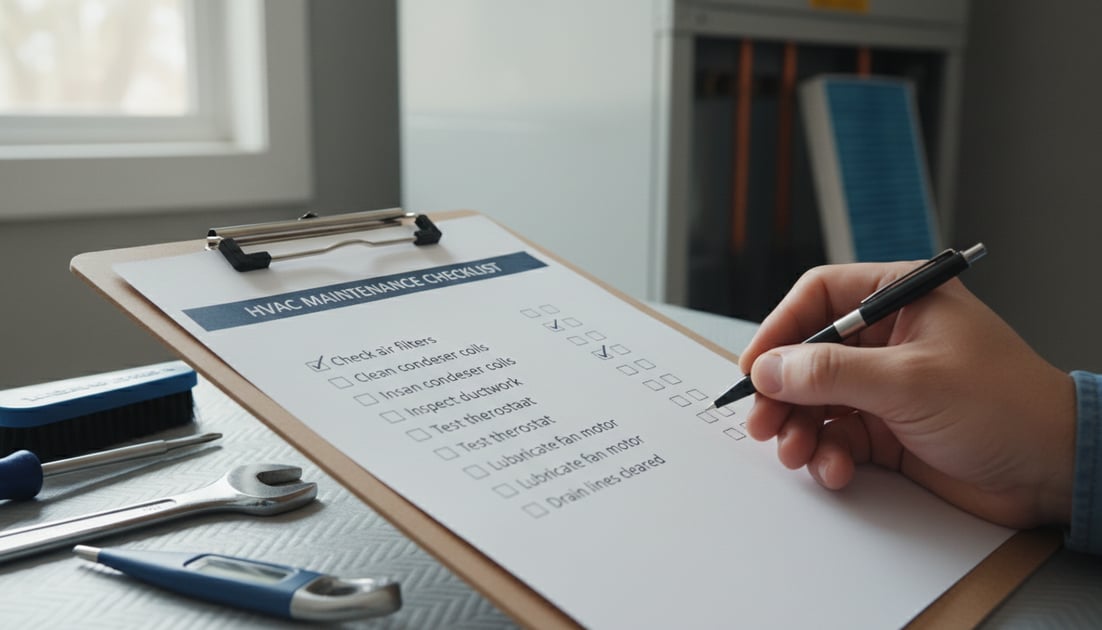
Here's your essential maintenance checklist with honest frequency recommendations:
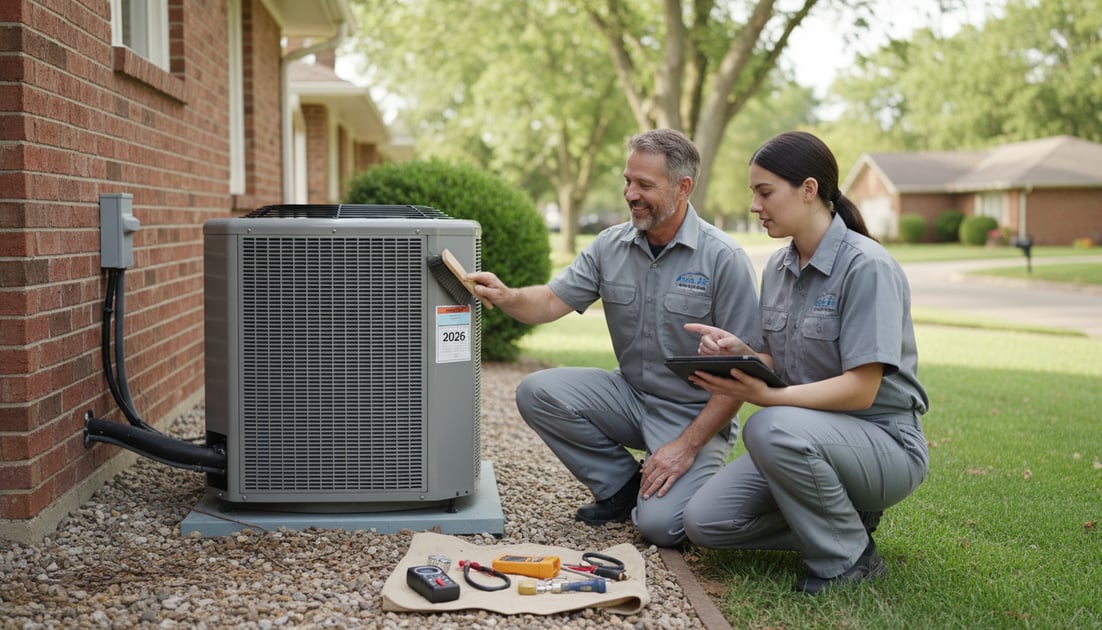
Filter Inspection and Replacement – Check monthly, replace quarterly or when visibly dirty. Clogged filters reduce airflow by up to 15%, forcing your system to work harder and compromising indoor air quality.
Refrigerant Level Checks – Inspect bi-annually during spring and autumn servicing. Low refrigerant signals leaks that waste energy and damage compressors. Semi-annual HVAC servicing aligns with UK commercial best practices.
Electrical Connection Tightening – Annual inspection prevents loose connections that cause system failures. This is where trustworthy technicians prove their worth – they'll show you what needs attention, not disconnect wires to create false problems.
Condensate Drain Clearing – Check quarterly to prevent water damage and mould growth. Blocked drains are common in humid months and easily preventable.
Thermostat Calibration – Annual check ensures accurate temperature control. Smart building systems with occupancy sensors need firmware updates during this service.
Heat Exchanger Inspection – Annual visual inspection for cracks or corrosion, especially critical for heat pump systems. This directly impacts safety and efficiency.
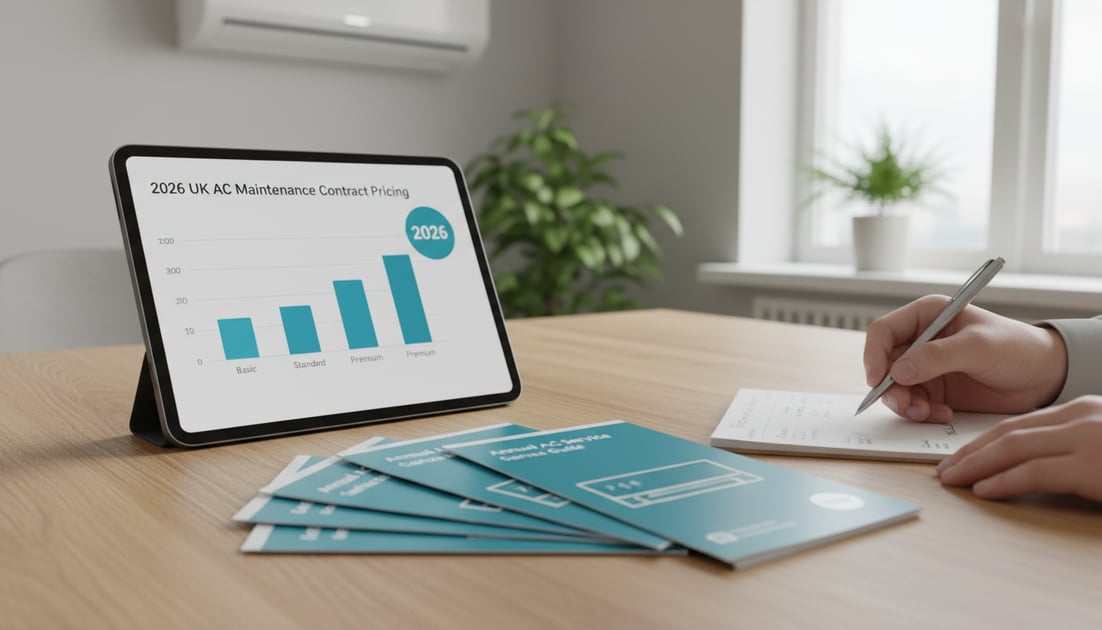
Be Cool Air Conditioning structures air conditioning repair visits around this framework because scheduled maintenance costs roughly £200 annually but prevents £500+ emergency callouts.
| Maintenance Task | Frequency | DIY or Professional |
|---|---|---|
| Filter replacement | Quarterly | DIY |
| Refrigerant check | Bi-annually | Professional service |
| Full system inspection | Annually | Certified technician |
| Condensate drain clearing | Quarterly | DIY (professional if blocked) |
Installation cost concerns? Preventive maintenance extends equipment lifespan by 40%, delaying expensive HVAC system upgrades. That's long-term efficiency you can measure.
How Smart Building Technology Transforms HVAC Maintenance
Picture this: your HVAC system detects a refrigerant leak and alerts a technician before you notice any temperature changes. That's not future speculation – it's happening now with IoT smart building sensors that monitor system performance in real-time.
Smart building technology uses interconnected sensors and AI-driven diagnostics to shift HVAC maintenance from reactive to predictive. IoT sensors continuously track temperature fluctuations, pressure levels, energy consumption, and equipment vibrations. When patterns deviate from normal operation, the platform flags potential issues before they escalate into system failures.
The financial impact is measurable. Predictive maintenance strategies reduce HVAC equipment downtime by up to 25%, whilst AI-enabled automation delivers 20% average energy savings in UK installations. These aren't marginal gains – they're substantial improvements in both system performance and operational costs.
Here's how the technology works: occupancy sensors detect when spaces are unoccupied and automatically adjust heating or cooling output. Pressure sensors identify refrigerant leaks within hours rather than months. AI algorithms analyse historical performance data to predict component failures weeks in advance, allowing you to schedule preventive maintenance during convenient timeframes rather than facing emergency callouts.
The installation cost for smart sensors typically ranges from £500 to £2,000 depending on system complexity, but the return on investment appears quickly. You're avoiding emergency service fees, reducing energy waste, and extending equipment lifespan through optimised operation. Indoor air quality improves because sensors trigger filter replacement alerts based on actual airflow restriction, not arbitrary time intervals.
Traditional HVAC maintenance relies on scheduled inspections that might miss developing problems. Smart building platforms provide continuous monitoring that catches inefficiencies immediately, turning your HVAC system into a self-diagnosing network that supports long-term efficiency.
Seasonal Maintenance Variations for UK Climate Zones
UK climate zones demand different HVAC maintenance approaches because regional weather patterns create distinct equipment stresses. The south experiences warmer temperatures whilst the west receives significantly more rainfall – December 2025 saw south-west England and Wales record 199.7mm of rainfall (131% of average) compared to East Anglia's 46.6mm (just 80% of average).
Step 1: Adjust Spring Maintenance by Coastal Proximity
Coastal regions need thorough corrosion inspections during March and April servicing. Salt air accelerates metal degradation in outdoor units, particularly condenser coils. Inland properties can extend coil cleaning intervals by 4-6 weeks without compromising energy efficiency.
Step 2: Schedule Autumn Checks Based on Regional Rainfall
Wetter western regions require condensate drain inspections in September, before heavy autumn rainfall begins. Eastern areas with lower precipitation can delay this check until October. Be Cool Air Conditioning schedules AC installation services with drainage considerations specific to local rainfall patterns.
Step 3: Adapt Filter Replacement to Urban Air Quality
London and major cities need monthly filter checks due to higher particulate pollution affecting indoor air quality. Rural properties typically manage with quarterly replacements. Your HVAC maintenance service frequency should reflect actual air contamination, not generic timelines.
Step 4: Time Heat Pump Defrost Checks Regionally
Northern Scotland properties require defrost cycle verification by late October. Southern England systems rarely encounter freezing conditions before December. This timing difference prevents unnecessary service calls whilst ensuring preventive maintenance happens before frost arrives.
Regional customisation isn't complicated – it's about matching maintenance schedules to actual climate stresses your equipment faces throughout the year.
Energy Efficiency Upgrades vs Routine Maintenance: Cost-Benefit Analysis
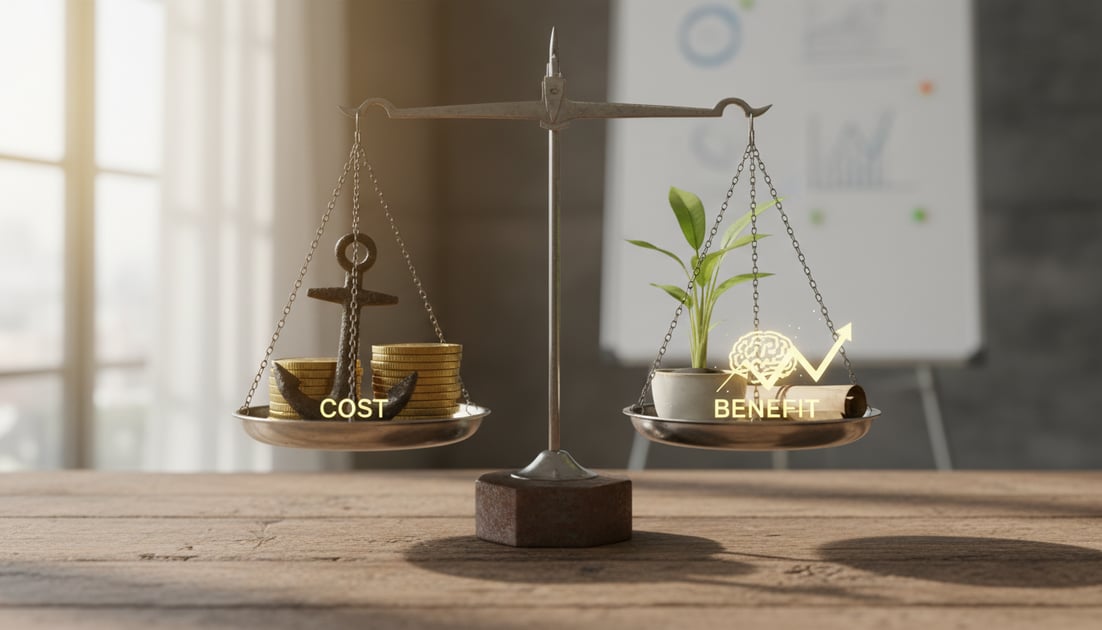
The maintenance-only approach costs less upfront but delivers diminishing returns. Energy efficiency upgrades require substantial initial investment yet generate measurable cost savings that compound annually. Here's the honest calculation you need for 2026 planning.
Maintenance-Only Approach: Annual servicing runs approximately £200, catching inefficiencies before they become system failures. Over five years, you'll spend £1,000 maintaining existing equipment. Your energy bills remain stable but won't decrease significantly. This approach works if your current HVAC system operates efficiently and uses compliant refrigerants.
Upgrade Investment: Installing a heat pump costs £8,000-£12,000, but heat pumps can slash household heating bills by over £400 annually compared to gas boilers. Factor in £200 annual maintenance, and your five-year total reaches £11,000-£13,000. The payback period typically spans 15-20 years, though 2026 energy policy changes may accelerate returns.
The calculation shifts when you consider equipment age. Systems over 15 years old lose 20-30% efficiency regardless of maintenance quality. Preventive maintenance extends lifespan but can't restore original performance. At this point, installation cost becomes an investment in long-term efficiency rather than an avoidable expense.
| Approach | 5-Year Cost | Annual Savings | ROI Timeline |
|---|---|---|---|
| Maintenance only | £1,000 | £0 | N/A |
| Heat pump upgrade | £11,000-£13,000 | £400+ | 15-20 years |
| Smart building sensors | £1,500-£3,000 | £150-£300 | 5-10 years |
Be Cool Air Conditioning recommends this decision framework: maintain aggressively if your system is under 10 years old and meeting efficiency targets. Consider HVAC system upgrades when equipment exceeds 15 years or when annual energy costs surpass £600 above comparable properties. Smart building integration offers the middle path – moderate installation cost with faster payback through optimised energy use and improved indoor air quality monitoring.
Improving Indoor Air Quality Through Sustainable Maintenance Practices
Indoor air quality is the measure of airborne contaminants, humidity levels, and ventilation effectiveness inside buildings – and it directly impacts your health, productivity, and energy bills. Sustainable maintenance practices enhance air quality whilst maintaining system efficiency through targeted interventions rather than generic servicing.
Energy Recovery Ventilator (ERV) Integration – ERV systems transfer heat and moisture between incoming fresh air and outgoing stale air, maintaining indoor air quality without wasting conditioned air. You're pre-conditioning outdoor air using energy already spent on your existing indoor climate. Annual ERV maintenance involves cleaning the heat exchanger core and inspecting airflow sensors. This approach reduces ventilation energy costs by 40-60% compared to simply exhausting conditioned air.
Advanced Filtration Upgrades – MERV 13-16 filters capture particles as small as 0.3 microns, including most airborne bacteria and virus carriers. Standard filters stop at MERV 8, missing finer contaminants that compromise indoor air quality. The trade-off? Higher-grade filters restrict airflow slightly, so your HVAC system needs adequate fan capacity. Check static pressure during installation to avoid straining equipment. Replace advanced filters every 3-4 months rather than quarterly to maintain both air quality and energy efficiency.
Humidity Control Through Preventive Maintenance – Condensate drain clearing prevents moisture accumulation that breeds mould and degrades indoor air quality. UK homes should maintain 40-60% relative humidity year-round. Quarterly drain inspections cost nothing if you handle them yourself, but blocked drains during humid months create air quality problems that require professional service. Smart building sensors can alert you when humidity exceeds target ranges, triggering maintenance before problems compound.
These practices work together – ERV systems provide fresh air efficiently, advanced filtration removes contaminants, and humidity control prevents biological growth. That's sustainable maintenance: improving indoor air quality whilst reducing energy waste through strategic HVAC system upgrades and preventive care.
DIY Maintenance Tasks vs When to Call Professional Engineers
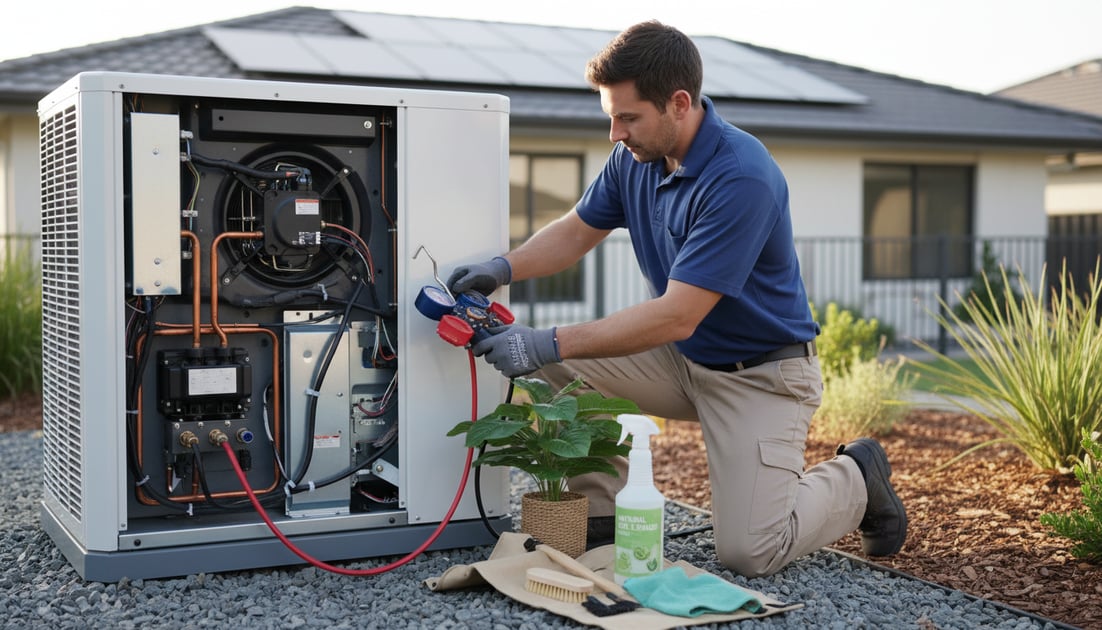
You can safely replace your HVAC filter yourself – unclip the panel, slide out the old filter, insert the new one matching airflow direction arrows. That's legitimate DIY maintenance. Attempting to recharge refrigerant without F-Gas certification? That's illegal in the UK and risks equipment damage, environmental fines, and potential injury from pressurised systems.
The distinction matters more in 2026 because sustainable technologies introduce complexities that traditional gas boilers never presented. Heat pumps operate with refrigerants requiring certified handling. Smart building systems with occupancy sensors need firmware updates and calibration beyond homeowner capability. Here's your honest breakdown.
Safe DIY Tasks: Filter replacement every 3-4 months maintains indoor air quality and energy efficiency. You can clean outdoor unit debris quarterly – turn off power, remove leaves and dirt blocking airflow. Condensate drain flushing with vinegar prevents clogs. Thermostat battery replacement and basic setting adjustments are straightforward. These tasks cost nothing beyond materials and protect your investment.
When to Call Certified Technicians: Refrigerant work requires F-Gas certification – full stop. Electrical diagnostics beyond visual inspection need professional service. Annual heat exchanger inspections demand expertise to identify cracks that cause carbon monoxide risks. Smart sensor calibration and occupancy sensor integration require technical knowledge. When searching "HVAC maintenance near me," you're looking for certified professionals who won't disconnect wires to fabricate problems.
The 62% of UK homeowners who delay professional maintenance often face higher long-term costs. Preventive care from qualified engineers catches inefficiencies early, whilst DIY tasks between professional visits maintain system performance. That's the balance – handle straightforward cleaning yourself, leave technical diagnostics and refrigerant work to certified technicians who understand sustainable HVAC system upgrades.
What to Expect from Commercial Building HVAC Maintenance in 2026
Commercial buildings face stricter maintenance requirements than residential properties in 2026, particularly with Variable Refrigerant Flow (VRF) systems becoming the preferred choice for multi-zone climate control. VRF systems are multi-split air conditioning configurations that adjust refrigerant flow to individual zones based on demand, delivering superior energy efficiency compared to traditional ducted systems. Annual professional servicing is mandatory to maintain 5-10 year manufacturer warranties, and UK F-Gas regulations now require higher efficiency natural refrigerants.
Your preventive maintenance schedule needs quarterly inspections for commercial buildings rather than bi-annual residential checks. VRF systems contain more complex components – multiple indoor units, branch controllers, and sophisticated refrigerant distribution networks that demand certified technician expertise. Predictive maintenance using IoT sensors increases uptime and lowers service costs by flagging refrigerant leaks or compressor inefficiencies before they cascade across zones.
Renewable energy integration is where commercial maintenance diverges significantly. Solar panels paired with heat pumps require electrical load balancing checks during each service visit. Battery storage systems need capacity testing to ensure they're actually offsetting peak-demand energy costs. These aren't theoretical considerations – maintenance and repair held 53.55% of Europe's HVAC services market share in 2025, driven by mandatory inspections for systems above specific capacity thresholds.
Be Cool Air Conditioning structures commercial maintenance around zone-by-zone performance verification rather than whole-system assessments. When occupancy sensors detect usage patterns, technicians optimise refrigerant distribution accordingly. Installation cost for VRF systems runs higher initially, but preventive maintenance preserves the long-term efficiency that justifies the investment. That's commercial-grade sustainable operations – scheduled care that protects both indoor air quality and operational budgets.
Your Next Steps Towards Sustainable HVAC Maintenance
Sustainable HVAC maintenance delivers measurable benefits: £400+ annual heating cost reductions, 40% longer equipment lifespan, and consistent indoor air quality through preventive care rather than reactive repairs. You've seen the 2026 regulatory changes, the maintenance checklists, and the honest cost-benefit calculations. Now it's time to act.
Start with quarterly filter replacements and schedule your bi-annual professional service before peak heating or cooling seasons arrive. If your system exceeds 15 years old, request an efficiency assessment to determine whether continued maintenance or HVAC system upgrades make financial sense. Smart building integration offers the middle path – moderate installation cost with faster payback through optimised energy use.
Be Cool Air Conditioning structures maintenance around these sustainable principles, providing certified technicians who focus on long-term efficiency rather than pushy sales tactics. You deserve transparent service that protects both your investment and the environment.
Ready to implement sustainable HVAC maintenance? Contact Be Cool Air Conditioning for a comprehensive system assessment and customised maintenance plan that matches your property's specific needs.