The true cost of AC downtime for UK commercial properties
By Be Cool Air Conditioning 15 min read
When Your Air Conditioning Fails: The Hidden Costs Property Managers Can't Ignore
A July heatwave hits London. Your office temperature climbs to 28°C by mid-morning. Staff productivity drops. Complaints flood in. Your air conditioning system sits silent, non-operational. The emergency repair callout costs £800, but that's just the beginning.
The true financial impact of cooling equipment downtime extends far beyond the immediate repair bill. According to the Health and Safety Executive, workplace temperatures exceeding 24°C can reduce cognitive performance by up to 10%, translating to measurable losses in output across commercial properties. When your HVAC system fails, you're simultaneously paying for the repair whilst losing revenue from reduced productivity, potential tenant dissatisfaction, and in retail environments, actual customer footfall.
Property managers across the UK face a calculation most overlook: downtime costs compound by the hour. A non-operational ventilation system in a commercial property doesn't just affect comfort – it impacts inventory management in temperature-sensitive spaces, triggers business interruption insurance considerations, and can even breach commercial lease obligations around maintaining suitable working conditions. The financial exposure from a single unit failure often exceeds the annual maintenance budget that could have prevented it entirely.
The True Financial Impact of AC Downtime on UK Commercial Properties
Downtime costs vary dramatically by sector. A retail store losing climate control during peak trading hours faces immediate revenue loss as customers leave uncomfortable premises. Healthcare facilities risk medication spoilage. Office environments see productivity collapse whilst still paying full staff wages.
The hourly financial impact breaks down by industry type:
| Sector | Hourly Downtime Cost | Primary Loss Driver |
|---|---|---|
| Retail (high street) | £500-£2,000 | Customer exodus, reduced footfall |
| Office (200+ staff) | £300-£800 | Productivity decline, staff complaints |
| Hospitality | £800-£3,500 | Guest dissatisfaction, refunds, reviews |
| Healthcare | £1,200-£5,000 | Inventory spoilage, patient safety |
These figures represent direct losses only. A London office with 200 employees at an average salary of £35,000 loses approximately £700 per hour when office temperature climbs above comfortable levels and productivity drops by 10%. That's before counting the emergency repair callout.
Business interruption insurance rarely covers gradual HVAC deterioration. Most policies require sudden, unforeseen failure to trigger coverage. This gap means property managers absorb costs from ageing ventilation systems that progressively lose capacity during heatwave periods – precisely when demand peaks.
Consider a boutique hotel in Manchester. Their cooling equipment fails on a Friday evening in August. The weekend generates £12,000 in room revenue. Without climate control, they offer 30% refunds and face negative reviews that impact future bookings. Total exposure: £3,600 immediate loss, plus estimated £8,000 in lost future revenue from damaged reputation. The unit failure repair costs £950.
Be Cool Air Conditioning tracks commercial downtime incidents across client portfolios. The pattern repeats: reactive maintenance costs 3-5 times more than preventative air conditioning services when you factor in business interruption. A £300 quarterly inspection prevents the £15,000 weekend disaster.
The calculation isn't complex. Calculate your hourly revenue, add productivity losses, multiply by expected downtime duration. Most commercial HVAC repairs take 4-24 hours depending on parts availability. That's your baseline exposure before considering tenant satisfaction impacts on commercial lease value.

How Much Does AC Cost to Run in the UK?
Air conditioning running costs in the UK depend primarily on system efficiency, usage hours, and current electricity rates. A typical commercial air conditioning unit consumes between 2-5 kW per hour, translating to operational costs that vary significantly based on equipment age and maintenance status.
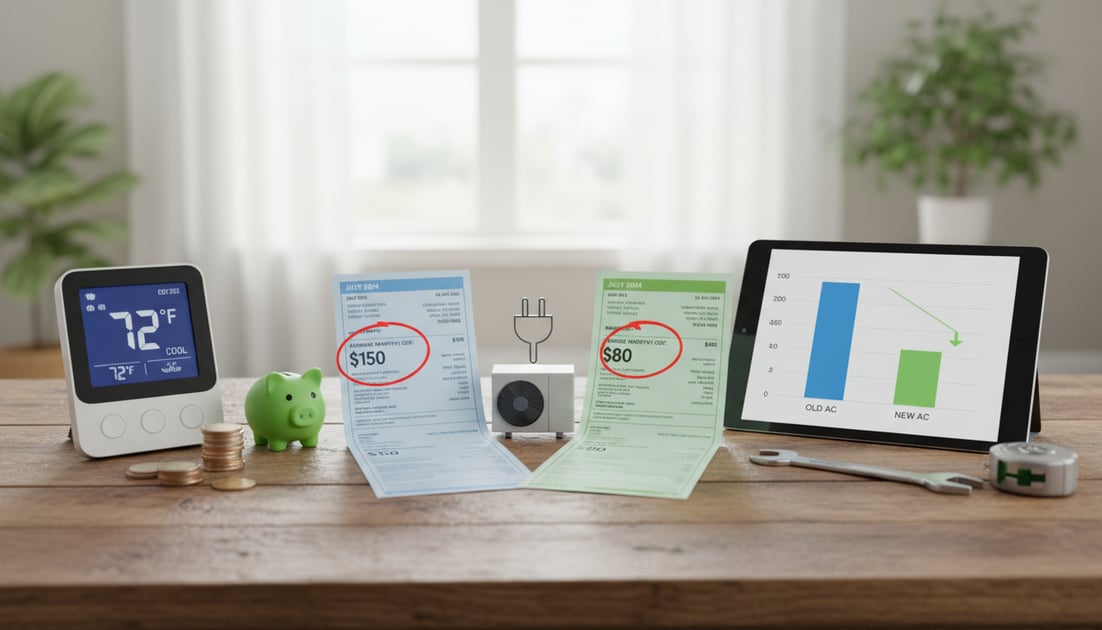
1. Standard Running Costs – A 3.5 kW commercial air conditioning unit running 8 hours daily costs approximately £3.50-£4.20 per day at current UK electricity rates of £0.35-£0.40 per kWh. That's £105-£126 monthly during peak summer operation across commercial properties.
2. Efficient vs Inefficient Systems – Modern A-rated cooling equipment consumes 30-40% less energy than older units. An inefficient 10-year-old system might cost £180 monthly to operate the same space that a new energy-efficient unit cools for £108. The difference compounds across multiple units in commercial properties to rent.
3. Peak Period Impact – During heatwave conditions, poorly maintained ventilation systems work harder and consume more energy. A unit with dirty filters or low refrigerant can increase running costs by 25-35% whilst delivering reduced cooling capacity.
4. Automation Benefits – AI-enabled HVAC automation demonstrated 20% average energy savings in 2024 UK pilot sites through optimised scheduling and load management. Commercial property managers implementing smart controls reduce operational expenditure whilst maintaining office temperature standards.
Regular AC installation assessments identify inefficient units before they escalate operational costs. The monthly savings from upgrading a single inefficient 5 kW unit can reach £72, recovering replacement costs within 3-4 years whilst eliminating the downtime risk from unit failure.
Legal and Regulatory Risks: What UK Property Managers Must Know
The Workplace (Health, Safety and Welfare) Regulations 1992 place direct legal responsibility on property managers to maintain 'reasonable' workplace temperatures in commercial properties. Whilst the Health and Safety Executive doesn't specify a maximum temperature, their guidance states that when office temperature exceeds comfortable levels, you must take action. That includes ensuring your ventilation systems function properly during heatwave periods.
The financial stakes extend beyond comfort. Under the regulations, employee complaints about excessive heat can trigger HSE investigations. Enforcement notices, improvement orders, and in severe cases, prosecution follow documented failures to address workplace climate control. The regulatory risk compounds when your cooling equipment fails during peak summer months precisely when temperatures climb.
TM44 inspections add another compliance layer. Commercial properties with air conditioning systems exceeding 12 kW output require mandatory energy efficiency assessments every five years. Non-compliance carries penalties up to £300 per system, but the real exposure lies in the inspection findings themselves. Reports identifying poor maintenance or inefficient operation create documented evidence of neglect should subsequent unit failure trigger tenant disputes or insurance claims.
Building Regulations Part F governs ventilation standards in commercial properties. When you install or replace cooling equipment, the work must meet current ventilation requirements or face enforcement action from building control. The regulations tighten from 2026 with enhanced overheating controls, meaning ageing systems may not meet replacement standards when they eventually fail.
Legal liability during AC failures centres on duty of care. Property managers must demonstrate reasonable steps to prevent foreseeable harm. A documented preventative maintenance programme provides your primary defence. Without it, you're exposed when tenants claim breach of lease terms around maintaining suitable working conditions or when staff cite health impacts from excessive office temperature exposure.
Be Cool Air Conditioning advises commercial clients to treat HVAC compliance as risk management, not just operational maintenance. The documentation trail from regular inspections protects you far more than the mechanical benefits alone.
Employee Productivity Losses: The Temperature-Performance Connection
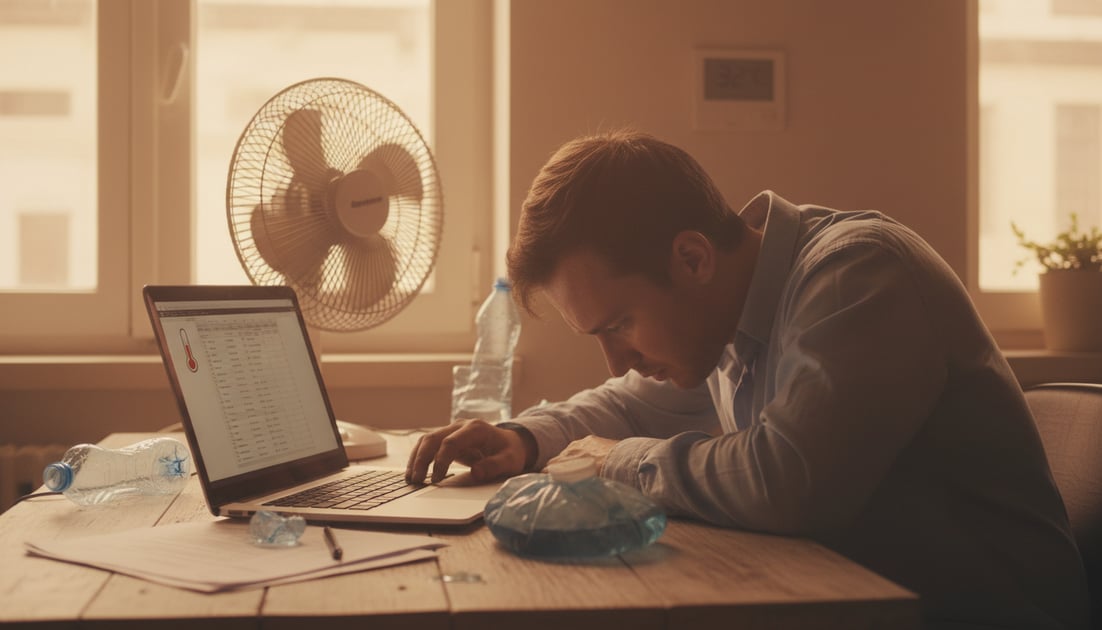
A Manchester office hits 27°C during a June heatwave. Staff complete tasks 15% slower. Cognitive errors increase. The air conditioning unit failed overnight, and whilst you wait for air conditioning repair, you're paying full salaries for diminished output.
Research from the Health and Safety Executive demonstrates that workplace temperatures exceeding 24°C reduce cognitive performance by up to 10%. The impact accelerates beyond 26°C. A 200-person office paying £700,000 monthly in wages loses approximately £70,000 in productive output during a week-long heatwave when office temperature remains uncontrolled. That's the equivalent of 10 employees producing nothing whilst drawing full pay.
The productivity decline manifests across multiple dimensions. Typing accuracy drops 44% when temperatures climb from 20°C to 30°C, according to occupational health studies. Decision-making speed decreases. Staff take longer breaks seeking cooler areas. Phone manner deteriorates as discomfort shortens patience with customers.
Unit failure during peak summer creates the worst scenario. Your cooling equipment stops precisely when outdoor temperatures maximise heat gain. A three-day repair delay during a heatwave costs that 200-person office approximately £21,000 in lost productivity – before counting the emergency repair callout itself. Indoor climate control isn't a luxury amenity. It's operational infrastructure that directly protects revenue.
The calculation changes your maintenance priorities. Preventative servicing costs £200-400 quarterly. A single productivity loss incident during downtime costs fifty times that amount. Property managers who track occupancy levels against office temperature data consistently find the correlation: controlled climate equals consistent output.
What is the 20 Rule for Air Conditioners?
The 20-degree rule states that your air conditioning system should maintain an indoor temperature no more than 20°F (approximately 11°C) cooler than the outdoor temperature. This guideline protects both system efficiency and equipment longevity. When you push your cooling equipment beyond this threshold, the compressor works significantly harder, energy consumption spikes, and you risk premature unit failure.
For commercial properties, this rule carries serious operational implications. A London office setting thermostats to 18°C during a 32°C heatwave forces ventilation systems into continuous maximum-load operation. Energy costs increase by 25-35% whilst the strain accelerates wear on critical components. The system delivers inadequate cooling whilst consuming excessive power – the worst possible outcome.
Property managers who ignore the 20-degree rule face predictable consequences: higher operational expenditure, increased downtime risk, and shortened equipment lifespan. A properly specified system respects this threshold through appropriate capacity sizing during installation, preventing the cycle of overwork that leads to emergency repair situations during peak demand periods.
Emergency Repair Response: Why Every Hour Matters
Step 1: Calculate Your Hourly Exposure – Delayed emergency repair escalates costs exponentially, not linearly. That first hour without cooling equipment costs you the callout fee plus immediate productivity losses. The second hour adds cumulative staff discomfort and customer impact. By hour six, you're facing potential inventory damage in temperature-sensitive commercial properties. Calculate your baseline: hourly revenue plus wage costs multiplied by productivity decline percentage. A retail space losing £500 hourly during peak trading transforms a £800 repair into a £4,800 six-hour crisis.
Step 2: Demand Technology-Enabled Response – Modern service providers use GPS dispatch, real-time parts inventory tracking, and mobile diagnostics platforms. These aren't luxury features. They're operational necessities that cut response times from hours to minutes. Leading commercial HVAC providers achieve under-one-hour response times in urban areas through route optimisation technology. When you're interviewing service providers, ask specific questions: What's your average mobilisation time? Do you track engineer location? Can you confirm parts availability before dispatch?
Step 3: Establish Response Time Guarantees – Your emergency AC repair contract should specify maximum response times with financial penalties for breaches. Four-hour guarantees suit most commercial properties. Critical facilities need one-hour commitments. The guarantee protects you twice: it ensures prioritisation during peak demand periods like heatwaves, and it provides compensation when delays occur. Without contractual response times, you're competing for attention against every other unit failure during the exact moment when service demand peaks.
Step 4: Verify Out-of-Hours Coverage – Cooling equipment doesn't fail conveniently during business hours. A Friday evening unit failure without 24/7 service access means waiting until Monday whilst losing an entire weekend's revenue. Verify your provider maintains genuine round-the-clock engineer availability, not just an answering service that takes messages. Test it: call at 10pm on a Saturday and see who answers.
Preventative Maintenance: The Most Cost-Effective Downtime Prevention
Preventative maintenance delivers the highest Return on Investment (ROI) of any downtime mitigation strategy. A structured maintenance programme costs £800-1,200 annually for a typical commercial cooling system. The alternative – reactive emergency repair during a heatwave – averages £2,500-4,000 when you combine callout fees, expedited parts, and business interruption losses.
1. Seasonal Maintenance Requirements – Your ventilation systems need specific attention twice annually. Spring inspections before cooling season begins should cover refrigerant levels, electrical connections, and filter replacement. Autumn servicing prepares units for winter shutdown by clearing condensate drains and checking heating elements. Each service takes 2-3 hours per unit and costs £150-250. Skip either, and you're gambling with unit failure during peak demand.
2. Component Replacement Schedules – Critical components wear predictably. Filters need quarterly replacement in high-use environments. Compressors last 10-15 years. Fans run 12-18 years before failure. Capacitors fail after 5-7 years. Tracking these lifecycles lets you schedule replacement during low-demand periods at standard rates rather than paying emergency premiums during July heatwaves.
3. TM44 Compliance Integration – Commercial properties with cooling equipment exceeding 12 kW output require mandatory TM44 energy efficiency assessments every five years. Recent data shows 63% of building owners managing multiple properties failed to maintain valid certificates across their portfolio. The £300 penalty matters less than the compliance documentation protecting you during insurance claims or tenant disputes.
| Approach | Annual Cost | Typical Failure Rate | Emergency Incident Cost |
|---|---|---|---|
| Preventative Programme | £800-1,200 | 2-4% | £0 (prevented) |
| Reactive Only | £0 upfront | 18-25% | £2,500-4,000 per incident |
| Hybrid (irregular) | £400-600 | 10-15% | £2,000-3,500 per incident |
The calculation isn't complex. A property managing six commercial units spends £6,000 annually on comprehensive preventative maintenance. Without it, expect 1-2 emergency failures yearly costing £5,000-8,000 total, plus productivity losses during downtime that double the real exposure.
Component replacement follows predictable patterns. Budget £300-500 per unit annually for scheduled parts replacement. That's consumables, wear items, and planned upgrades. Emergency component replacement during unit failure costs 40-60% more due to expedited shipping and out-of-hours labour rates.
Be Cool Air Conditioning tracks maintenance programme outcomes across commercial clients. Properties with quarterly inspections experience 89% fewer emergency callouts than reactive-only approaches. The operational continuity benefit exceeds the direct cost savings – you're protecting revenue streams, not just avoiding repair bills.
What is the 3 Minute Rule for AC?
The 3-minute rule requires waiting at least three minutes after shutting off your air conditioning system before restarting it. This delay protects the compressor by allowing refrigerant pressure to equalise throughout the system. Restarting too quickly forces the compressor to work against high pressure, causing overheating, potential mechanical failure, and significantly shortened equipment lifespan.
Commercial properties face higher stakes with this rule. A facilities manager cycling power during troubleshooting can inadvertently damage cooling equipment worth £15,000-40,000 through repeated rapid restarts. During power outages or emergency repair situations, respecting the three-minute interval prevents converting a simple service call into a catastrophic compressor replacement. The rule applies universally across ventilation systems, but commercial units with larger compressors experience more severe damage from violations. Your emergency response protocol should explicitly instruct staff to wait before power cycling non-operational units during heatwave failures.
Insurance and Business Interruption: Are You Covered?
Business interruption insurance protects lost income from unexpected events, including equipment failure. Here's the problem: most commercial property policies contain specific exclusions that catch property managers off guard when cooling equipment fails during critical trading periods.
Standard business interruption coverage requires sudden, unforeseen failure to trigger claims. Your ageing HVAC system gradually losing capacity doesn't qualify. When office temperature climbs progressively over three days as the unit struggles, insurers classify this as maintenance failure, not insurable incident. You're absorbing the full downtime costs whilst still paying premiums.
The claim requirements create additional friction. Insurers demand documented maintenance records proving you followed manufacturer servicing schedules. Without quarterly inspection logs and component replacement receipts, your claim faces rejection regardless of failure circumstances. That £15,000 weekend loss at your Manchester hotel becomes unrecoverable because you skipped spring maintenance.
Inventory management adds another coverage layer in retail and hospitality sectors. Temperature-sensitive stock spoilage from unit failure requires separate inventory coverage beyond standard business interruption policies. A restaurant losing £3,000 in refrigerated inventory during a cooling system failure needs explicit perishables coverage – most basic policies exclude this exposure entirely.
The protection gap widens during heatwave periods when multiple commercial properties file simultaneous claims. Insurers scrutinise HVAC failure claims more rigorously during peak summer months, looking for maintenance negligence to deny coverage. Your best defence isn't better insurance – it's documented preventative maintenance that prevents claims altogether whilst satisfying policy requirements if failure occurs despite proper care.
Modern Solutions: VRF Systems and Energy-Efficient Technology
Variable Refrigerant Flow (VRF) systems represent the most significant advancement in commercial climate control for downtime prevention. These platforms use precise refrigerant distribution to multiple indoor units from a single outdoor compressor, eliminating the single-point failure risk that plagues traditional ventilation systems. When one zone experiences issues, the rest continue operating – you're managing a localised problem, not a building-wide crisis.
VRF systems reduce energy consumption by 30-45% compared to conventional cooling equipment. That translates to operational savings of £3,000-8,000 annually for a typical 2,000 square metre commercial property. The efficiency gain comes from variable-speed compressors that match output precisely to demand, rather than cycling on-off like traditional units that waste energy during startup.
The downtime mitigation benefit exceeds the energy savings. Traditional systems create all-or-nothing scenarios during unit failure. VRF architecture provides redundancy – partial capacity beats zero capacity during heatwave periods when emergency repair response times stretch to 6-12 hours.
| System Type | Energy Efficiency | Downtime Risk | 10-Year Operating Cost |
|---|---|---|---|
| Traditional Split | Baseline | High (single point failure) | £45,000-60,000 |
| VRF Multi-Zone | 30-45% reduction | Low (zone isolation) | £28,000-38,000 |
| BMS-Connected VRF | 50-55% reduction | Minimal (predictive alerts) | £24,000-32,000 |
Building Management System (BMS) integration adds predictive maintenance capabilities. Connected VRF units monitor performance metrics continuously, flagging declining efficiency before complete failure occurs. You schedule repairs during low-demand periods rather than scrambling during peak summer trading hours.
Protecting Your Property Investment: Taking Action on AC Downtime
The pattern emerges clearly across every sector: downtime costs from cooling equipment failures exceed preventative maintenance investment by margins of 3:1 to 15:1 depending on your commercial property type. Emergency repair callouts during heatwave periods cost £800-2,500, but that's merely the visible expense. The real exposure lies in productivity losses, customer exodus, inventory spoilage, and tenant satisfaction impacts that compound hourly whilst you wait for parts and engineers.
Your protection strategy centres on three actions. First, calculate your actual hourly downtime exposure using the sector benchmarks – retail loses £500-£2,000 hourly, offices £300-£800, hospitality £800-£3,500. That number justifies your preventative maintenance budget instantly. Second, establish contractual response time guarantees with your service provider, because four-hour delays during peak summer trading transform £800 repairs into £4,000+ incidents. Third, document everything – your insurance coverage and legal compliance both depend on maintenance records when unit failure occurs despite your best efforts.
Be Cool Air Conditioning works with commercial property managers who've learned this lesson the expensive way: reactive approaches cost more, disrupt operations longer, and expose you to regulatory and tenant risks that preventative programmes eliminate entirely. The investment isn't complex – quarterly inspections at £200-400 prevent the £15,000 weekend disasters that damage both revenue and reputation.
Get your commercial property protected with a preventative maintenance assessment. Your tenants, your balance sheet, and your summer trading periods depend on operational continuity you can't achieve through reactive emergency repair alone.
Frequently Asked Questions
What is the 20 rule for air conditioners?
The " AC 20-degree rule " is a guideline suggesting you should set your thermostat no more than 20 degrees Fahrenheit cooler than the outside temperature to prevent your air conditioner from overworking, saving energy, and reducing wear and tear. For example, if it's 95°F outside, your thermostat should be set no lower than 75°F. This rule works because AC units struggle to cool by more than 20 degrees, leading to longer run times, higher bills, and potential breakdowns.
What is the 3 minute rule for AC?
The 3-minute rule for air conditioners is a guideline to wait at least three minutes after turning the unit off before turning it back on, to allow refrigerant pressure to equalize, preventing strain and potential damage to the expensive compressor, thus extending the unit's lifespan and avoiding costly repairs from short-cycling. This simple pause protects the system's heart, the compressor, from electrical surges and high-pressure starts, which can cause premature failure.