Commercial AC energy efficiency upgrades: 2026 cost guide
By Be Cool Air Conditioning 13 min read
Why 2026 Is the Year to Upgrade Your Commercial AC System
The perfect storm is brewing for commercial cooling system upgrades. UK businesses face industrial electricity prices at £56 per megawatt-hour – significantly higher than the £34-£38 range across the EU – making inefficient HVAC systems increasingly expensive to operate. Add the accelerating F-gas phasedown pushing refrigerant costs upward, and older units become financial liabilities.
Energy efficiency has shifted from nice-to-have to business-critical. Modern commercial AC systems with higher Seasonal Energy Efficiency Ratio (SEER) ratings can cut operational costs by 20-40% compared to units over a decade old. The load calculation matters too – oversized systems waste energy, whilst undersized ones struggle to maintain indoor air quality.
Be Cool Air Conditioning sees businesses waiting for "the right time" to upgrade, but 2026 removes that luxury. Regulatory pressure, rising energy costs, and the growing availability of heat pump alternatives create compelling economics for replacement now rather than emergency repairs later.
Will the Price of Air Conditioners Go Up in 2026?
Yes, commercial AC unit installation costs are climbing. Industry forecasts show the UK HVAC market reaching USD 2.77 billion in 2026, with commercial segments growing at 7.26% annually – significantly faster than residential markets. This growth reflects increasing demand but also upward price pressure.
Three factors drive 2026 pricing. The F-gas phasedown continues pushing refrigerant costs higher, particularly for older systems using high-GWP refrigerants. Energy efficiency regulations tighten, requiring more sophisticated components and low-GWP alternatives for compliance. Supply chain stabilisation has improved from pandemic disruptions, but component costs haven't returned to pre-2020 levels.
Floor-mounted commercial units currently range £550-£2,100 including labour, though larger HVAC systems with chillers or heat pump integration cost considerably more. Load calculation complexity, indoor air quality requirements, and system performance specifications all influence final installation costs.
The silver lining? Higher upfront costs for energy-efficient upgrades deliver stronger long-term savings. With UK industrial electricity at £56 per megawatt-hour, operational efficiency matters more than purchase price. Investing in a properly sized commercial cooling system now protects against both rising energy costs and emergency replacement during peak season when prices spike further.
What Are the New HVAC Rules in 2025-2026?
Regulatory changes are reshaping commercial AC installation across the UK. Understanding these rules helps you avoid compliance issues and costly retrofits.
F-Gas Phasedown Intensifies – The UK's hydrofluorocarbon (HFC) phasedown continues reducing refrigerant quotas, pushing businesses toward low-GWP alternatives. From 2025, stricter allocation limits make high-GWP refrigerants scarcer and more expensive. New commercial cooling systems must use environmentally friendly refrigerants like R-32 or R-454B to ensure long-term viability.
Equipment Bans Expand – According to UK Government guidance, certain F-gas products face outright bans. Single-split AC systems containing more than 3kg of refrigerant with GWP over 750 are prohibited in new installations. This directly affects commercial AC installation planning and equipment selection.
Building Regulations Tighten – Energy performance requirements for commercial buildings strengthen in 2026. HVAC systems must meet higher efficiency standards, making proper load calculation essential. Indoor air quality standards also influence system design, requiring better ventilation integration.
Certification Requirements – F-gas regulations mandate that only certified technicians handle refrigerants. Be Cool Air Conditioning ensures all engineers hold current F-gas certifications for compliant AC installation services.
These rules aren't optional. They directly impact installation costs, equipment choices, and operational efficiency for your commercial HVAC system.
Commercial AC Upgrade Costs by System Type: 2026 UK Price Guide
Commercial cooling system costs vary dramatically by technology. Understanding these differences helps you budget accurately and choose the right HVAC system for your operational needs.
System-by-System Cost Breakdown
Variable Refrigerant Flow (VRF) systems lead in flexibility and efficiency. Installation costs range £8,000-£25,000+ depending on building size and zone requirements. VRF excels in multi-zone commercial spaces where different areas need independent temperature control. The technology delivers superior energy savings through precise load calculation and refrigerant flow management.
Chiller systems suit larger commercial applications. Water-cooled chillers cost £15,000-£50,000+ installed, whilst air-cooled variants start around £12,000. These HVAC systems handle substantial cooling loads efficiently but require dedicated plant rooms and regular maintenance schedules.
Heat pump systems offer heating and cooling in one unit. Commercial heat pump installation costs sit between £10,000-£15,000 for typical applications. They deliver excellent operational efficiency and qualify for government incentives under clean energy programmes, reducing overall investment.
Split systems remain the most accessible entry point. Multi-split commercial AC installations range £3,000-£12,000 depending on indoor unit quantity and capacity. They work well for smaller commercial spaces or phased upgrades where budget constraints exist.
| System Type | Installation Cost | Best For | Energy Efficiency |
|---|---|---|---|
| VRF | £8,000-£25,000+ | Multi-zone buildings | Excellent (SEER 16-20) |
| Chiller | £12,000-£50,000+ | Large commercial facilities | Very good (EER 10-15) |
| Heat Pump | £10,000-£15,000 | Year-round climate control | Excellent (SCOP 3.5-4.5) |
| Multi-Split | £3,000-£12,000 | Small-medium spaces | Good (SEER 14-18) |
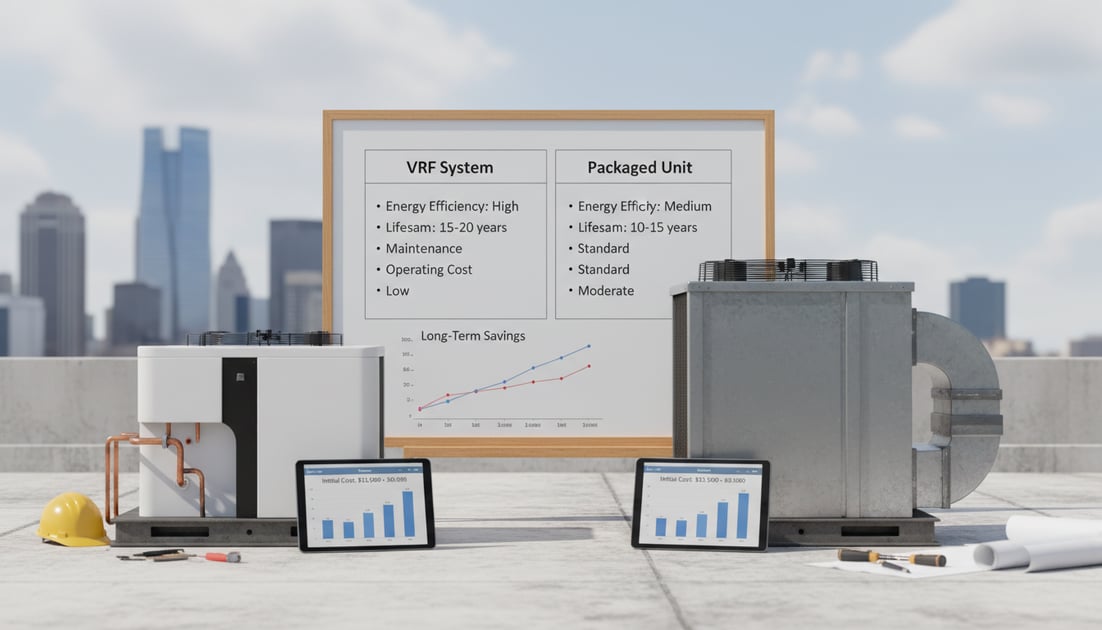
Installation cost represents only part of total ownership. Factor in operational efficiency, maintenance requirements, and indoor air quality capabilities. A properly sized system based on accurate load calculation delivers long-term savings that offset higher upfront investment.
Be Cool Air Conditioning recommends evaluating lifecycle costs alongside purchase price when selecting commercial cooling systems. The cheapest installation often becomes the most expensive to operate.
How Much Does It Cost to Increase EPC Ratings Through AC Upgrades?
Improving your Energy Performance Certificate (EPC) rating through commercial AC upgrades requires strategic investment. Commercial properties targeting EPC Band C typically spend £5,400 on average for compliance improvements, though costs vary significantly based on current rating and building characteristics.

HVAC system upgrades directly impact EPC assessments through operational efficiency metrics. Installing an energy-efficient heat pump or modern chiller can lift ratings by one or two bands depending on baseline performance. A properly sized commercial cooling system based on accurate load calculation reduces energy consumption – the primary driver of EPC scores.
The regulatory landscape adds urgency. UK landlords face a £10,000 spending cap per property to achieve EPC C compliance under Minimum Energy Efficiency Standards (MEES). Expenditure from October 2025 onwards counts toward this threshold, making early upgrades financially strategic.
Indoor air quality improvements through upgraded HVAC systems contribute additional EPC points. Modern units with superior ventilation capabilities score higher than older systems, particularly when combined with heat recovery technology.
Be Cool Air Conditioning recommends commissioning an EPC assessment before selecting equipment. This identifies which upgrades deliver maximum rating improvement per pound invested. Replacing an inefficient boiler with a heat pump often yields better EPC gains than AC-only upgrades, whilst combined systems address both heating and cooling efficiency for comprehensive energy savings.
Beyond Equipment Costs: The True Price of Commercial AC Upgrades
The commercial AC unit price is just the starting point. Total ownership costs include substantial expenses beyond the equipment itself, and understanding these hidden factors prevents budget surprises during your commercial AC installation project.
Installation Labour and Commissioning – Professional installation typically adds 25-35% to equipment costs. Commissioning ensures your HVAC system operates at design specifications, verifying load calculation accuracy and indoor air quality performance. Services account for 33.45% of UK HVAC revenue precisely because proper commissioning delivers the energy savings promised by high-efficiency equipment.
Ductwork Modifications – Existing ductwork rarely matches new system requirements. You'll spend £2,000-£8,000+ on duct modifications, sealing, or complete replacement depending on building layout. Undersized or leaky ductwork undermines even the most efficient heat pump or chiller, reducing system performance by 20-30%.
Controls and Smart Thermostats – Modern commercial cooling systems require sophisticated controls for zoning and operational efficiency. Smart thermostats add £500-£2,500 per zone but deliver 15-25% energy savings through intelligent scheduling and occupancy detection. Multi-zone buildings benefit most from these investments.

Electrical Upgrades – Commercial heat pumps and high-capacity chillers often require electrical panel upgrades. Budget £1,500-£5,000 for electrical modifications – envelope upgrades and electrical works can double initial installation budgets according to 2024 retrofit data.
Zoning Infrastructure – Zoning systems divide buildings into independently controlled areas, improving comfort and reducing waste. Dampers, zone controllers, and additional sensors cost £1,000-£4,000 per zone but cut operational costs substantially in buildings with varying occupancy patterns.
Be Cool Air Conditioning recommends requesting itemised quotes covering all these elements. Transparent pricing from air conditioning services providers helps you compare true project costs, not just equipment prices.
Energy Efficiency Standards: SEER2, EER2, and What They Mean for Your Bottom Line
Energy efficiency ratings shifted in 2023 with new SEER2 and EER2 standards replacing older metrics. SEER2 (Seasonal Energy Efficiency Ratio 2) measures cooling efficiency across an entire season under real-world conditions, whilst EER2 (Energy Efficiency Ratio 2) assesses peak performance during maximum load. These updated standards use more rigorous testing protocols, making ratings 4-5% lower than legacy SEER numbers but far more accurate for predicting actual energy savings.
The numbers translate directly to operational costs. A commercial AC unit with 18 SEER2 uses approximately 20% less electricity than a 14 SEER2 system running identical hours. At UK industrial electricity rates of £56 per megawatt-hour, that 20% reduction saves £2,240 annually on a system consuming 20,000 kilowatt-hours. Higher EER2 ratings matter most during peak demand periods when cooling loads max out – precisely when electricity costs spike.
Load calculation determines which rating matters more for your business. Buildings with consistent occupancy benefit from high SEER2 ratings delivering season-long efficiency. Facilities with variable loads – retail spaces, restaurants – gain more from strong EER2 performance during busy periods.
Modern commercial cooling systems achieve 18-20.5 SEER2 ratings compared to 10-13 SEER on units over a decade old. That efficiency gap compounds annually, turning older HVAC systems into operational liabilities that undermine your bottom line regardless of equipment condition.
Retrofit vs Replace: Choosing the Right Commercial AC Upgrade Strategy
Retrofitting means upgrading components within your existing HVAC system – compressors, controls, refrigerant conversion – whilst replacement installs entirely new equipment. The decision hinges on system age, efficiency gaps, and total lifecycle costs rather than upfront price alone.
Retrofits make financial sense for systems under 10 years old with solid infrastructure. Converting refrigerants to low-GWP alternatives costs £2,000-£5,000, whilst control upgrades add £1,500-£4,000. You'll achieve 15-25% energy savings without the disruption of full replacement. This approach works brilliantly when ductwork, electrical capacity, and structural elements already meet current standards.
Complete replacement becomes necessary when systems exceed 15 years or require frequent AC repair services. Older units operate at 10-13 SEER compared to modern 18-20 SEER systems – that efficiency gap costs thousands annually at £56 per megawatt-hour electricity rates.
| Factor | Retrofit | Replace |
|---|---|---|
| Upfront Cost | £3,000-£8,000 | £8,000-£25,000+ |
| Energy Savings | 15-25% improvement | 30-50% improvement |
| Payback Period | 2-4 years | 5-8 years |
| Best For | Systems under 10 years | Systems 15+ years old |
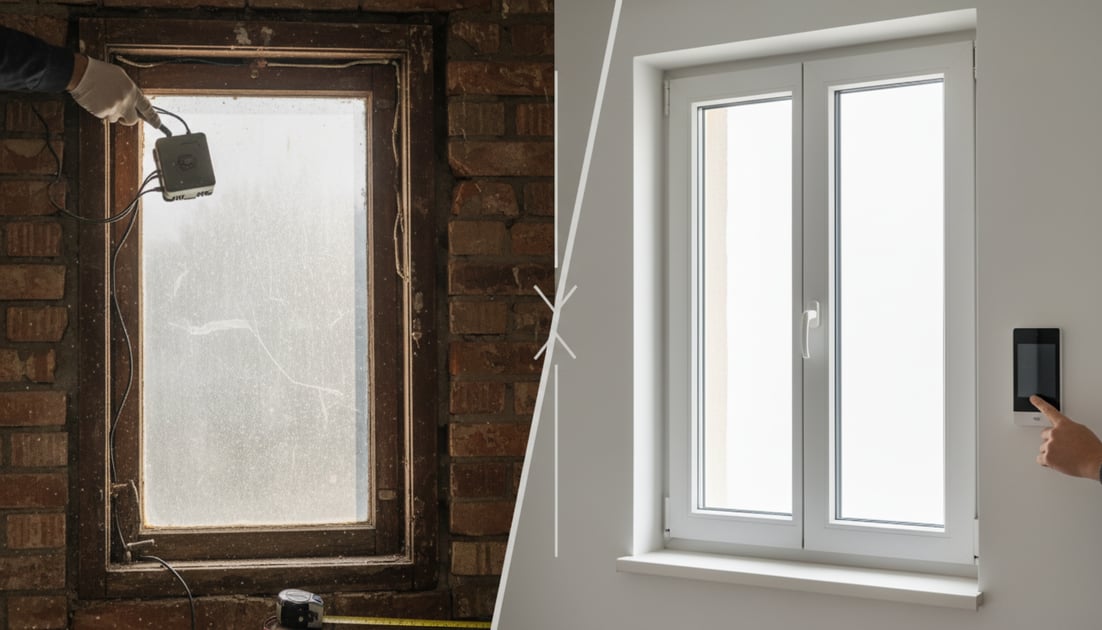
Calculate your break-even point. Divide replacement cost premium by annual energy savings to find payback years. If your current system needs major repairs exceeding 50% of replacement cost, skip the retrofit entirely.
2026 Government Rebates, Grants, and Tax Incentives for Commercial AC Upgrades
Financial assistance makes commercial cooling system upgrades far more affordable than equipment prices suggest. UK businesses access multiple incentive programmes that reduce installation costs and accelerate payback periods for energy-efficient HVAC systems.
Annual Investment Allowance (AIA) – You can claim 100% tax relief on qualifying plant and equipment up to £1 million. Commercial AC installations, heat pump systems, and chillers all qualify. This means a £15,000 commercial cooling system installation reduces your taxable profit by the full amount in year one, delivering immediate cash flow benefits worth £2,850-£3,750 depending on your corporation tax rate.
First Year Allowance (FYA) – Special rate assets including air conditioning qualify for 50% first-year relief under permanent full expensing rules introduced in April 2023. Projects exceeding the AIA threshold still benefit from accelerated depreciation, cutting tax liability substantially faster than the standard 6% annual writing down allowance.
Enhanced Capital Allowances – Energy-efficient equipment listed on the Energy Technology List qualifies for enhanced deductions. High-efficiency heat pumps and chillers meeting performance criteria deliver additional tax relief beyond standard allowances, making operational efficiency improvements financially compelling.
Local Authority Grants – Regional business energy efficiency schemes offer direct grants for commercial HVAC upgrades. Funding varies by location but typically covers 15-30% of installation costs for projects demonstrating significant energy savings. Be Cool Air Conditioning helps clients identify applicable programmes during project planning.
These incentives stack with energy savings from modern systems. Combined with 30-50% operational cost reductions, government support shrinks effective payback periods to 3-5 years for most commercial AC upgrades.
Sizing It Right: Load Calculations and Why They Matter for Cost Efficiency
Proper load calculation separates cost-effective commercial AC installations from expensive mistakes. ACCA Manual N provides the industry-standard methodology for commercial HVAC system sizing, assessing building characteristics, occupancy patterns, heat sources, and indoor air quality requirements. This precision matters because oversized systems waste money immediately and continuously.
UK manufacturing heating systems average just 24% utilisation according to January 2026 survey data – clear evidence of widespread oversizing. Oversized commercial cooling systems cycle on and off frequently, undermining operational efficiency and driving energy costs upward. They also fail to control humidity properly, compromising indoor air quality whilst consuming more electricity than correctly sized units.
The alternative to guesswork? Professional load calculation before equipment selection. A properly sized heat pump or chiller based on actual thermal loads delivers the energy savings you're paying for. Skip this step and you'll install expensive equipment that performs poorly regardless of its SEER2 rating. Be Cool Air Conditioning conducts detailed load calculations for every commercial project, ensuring system performance matches building requirements rather than rough estimates.
Maximising ROI: Ongoing Maintenance and Smart Building Integration
Maintenance contracts protect your investment whilst delivering measurable returns. Preventative maintenance costs £800-£2,500 annually for commercial HVAC systems depending on equipment complexity, but this spending prevents emergency commercial ac repair bills averaging 3-5 times higher. Regular servicing maintains system performance at design specifications, preserving the energy savings you paid for during installation.
Step 1: Implement Predictive Maintenance Schedules – Schedule quarterly inspections covering refrigerant levels, filter changes, and component wear. This routine maintenance catches minor issues before they escalate into costly failures that compromise indoor air quality and operational efficiency.
Step 2: Integrate Smart Building Controls – Honeywell Building Management Systems and similar IoT platforms deliver up to 10% additional energy savings with 8-month payback periods. These solutions optimise HVAC system operation based on occupancy, weather, and real-time load calculation adjustments.
Step 3: Monitor Indoor Air Quality Continuously – IoT sensors track ventilation effectiveness, identifying when your heat pump or chiller needs adjustment. Better indoor air quality reduces sick days whilst confirming your system operates efficiently.
Be Cool Air Conditioning includes maintenance planning with every installation, ensuring your commercial cooling system delivers promised returns year after year.
Making Your Commercial AC Upgrade Investment Work for You
Commercial AC upgrades deliver returns when you focus on lifecycle value, not just equipment price. Modern systems achieve payback periods of 3-8 years through energy savings of 30-50% compared to units over a decade old. At £56 per megawatt-hour, operational efficiency directly impacts your bottom line – a properly sized HVAC system based on accurate load calculation saves thousands annually whilst improving indoor air quality.
The numbers favour action now. Government incentives including 100% Annual Investment Allowance on qualifying equipment reduce effective installation costs substantially. Combined with F-gas phasedown pressure and rising refrigerant prices, delaying upgrades increases both emergency repair risks and total ownership expenses.
Be Cool Air Conditioning provides transparent pricing and expert load calculation for commercial cooling system projects across the UK. Our qualified engineers ensure your investment delivers promised energy savings through proper system sizing and professional installation.
Ready to explore your upgrade options? Contact Be Cool Air Conditioning for a detailed assessment and itemised quote tailored to your building's requirements.
Frequently Asked Questions
Will the price of air conditioners go up in 2026?
What's Driving Prices Up in 2026? Several economic factors are pushing HVAC costs higher industry-wide: Material price increases: Expect a 3–6% rise in the cost of equipment (condensers, heat pumps, furnaces) as well as supporting materials like line sets and pads.
Will air conditioners be more expensive in 2025?
Higher efficiency requirements and the introduction of new refrigerants are expected to increase air conditioner prices in 2025. The installation of filters, ductwork, and insulation can also significantly influence the overall cost, along with permit requirements and required inspections that vary by location.
How much does it cost to increase EPC?
Switching to a newer model of boiler can increase the EPC rating up to 40 points. Costs range between £600 to £2,500 for a replacement boiler. Solar panels can add up to 15 points to EPC ratings. These are by no means cheap as Energy Saving Trust's figures claim a 4.2 kilowatt-peak solar panel system is about £6,500.
What are the new HVAC rules in 2025?
Residential and light commercial air conditioners and heat pumps manufactured after Jan. 1, 2025, must use the new refrigerant. The equipment manufactured prior to this date has a one-year grace period to be installed — a Jan. 1, 2026, installation deadline.