Repair or replace your commercial AC: A facilities manager’s guide
By Be Cool Air Conditioning 14 min read
The Commercial AC Dilemma: Making the Right Call for Your Facility
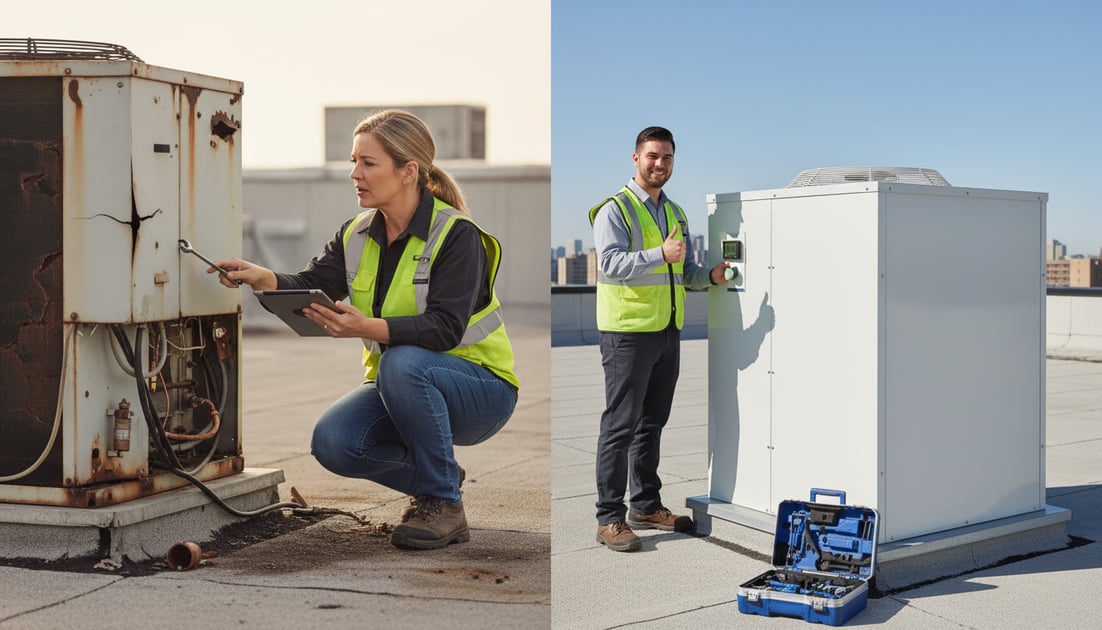
Your commercial Air Conditioning (AC) system has started underperforming. Now you're facing a decision that could impact your facility's budget for years to come. The repair or replace choice isn't just about immediate costs – it's about balancing energy efficiency, equipment warranties, and operational continuity against capital expenditure. According to the Carbon Trust, inefficient commercial cooling systems can waste up to 30% of energy consumption, translating to thousands in unnecessary costs annually. When an HVAC technician delivers the diagnosis, you need a framework that considers refrigerant compatibility, remaining equipment lifespan, and whether patching up ageing equipment makes financial sense. A proper system inspection reveals whether reduced airflow stems from a simple maintenance checklist issue or signals deeper problems requiring replacement. The stakes are high. Choose poorly and you'll either waste money on repeated repairs or replace a unit that had years of service left. This guide helps you make the right call.
Key Indicators Your Commercial AC System Needs Attention
Recognising early warning signs prevents costly emergency repairs and helps you evaluate whether your system warrants investment or replacement. Here are the critical indicators that demand immediate assessment:
Inconsistent Temperature Control – When different zones show temperature variations exceeding 2-3°C, your system struggles to maintain proper airflow. This often indicates failing compressors or ductwork issues that affect energy efficiency across your facility.
Unusual Noises or Odours – Grinding, squealing or banging sounds signal mechanical wear in motors or bearings. Musty smells suggest mould growth from condensation problems, whilst burning odours point to electrical faults requiring urgent attention.
Rising Energy Bills – A sudden 15-20% increase in cooling costs without usage changes reveals declining system efficiency. Ageing equipment works harder to deliver the same output, directly impacting your operational budget.
Visible Refrigerant Leaks – Pooling liquid or frozen coils indicate refrigerant loss. UK regulations require qualified engineers to address these issues, and older systems using phased-out refrigerants face expensive repairs or mandatory replacement.
Frequent Cycling – Systems switching on and off repeatedly struggle with capacity or thermostat calibration. This pattern accelerates component wear and suggests your equipment approaches the end of its useful lifespan.
Be Cool Air Conditioning recommends scheduling a diagnostic assessment when you notice two or more indicators simultaneously, as multiple symptoms typically signal systemic problems rather than isolated component failures.
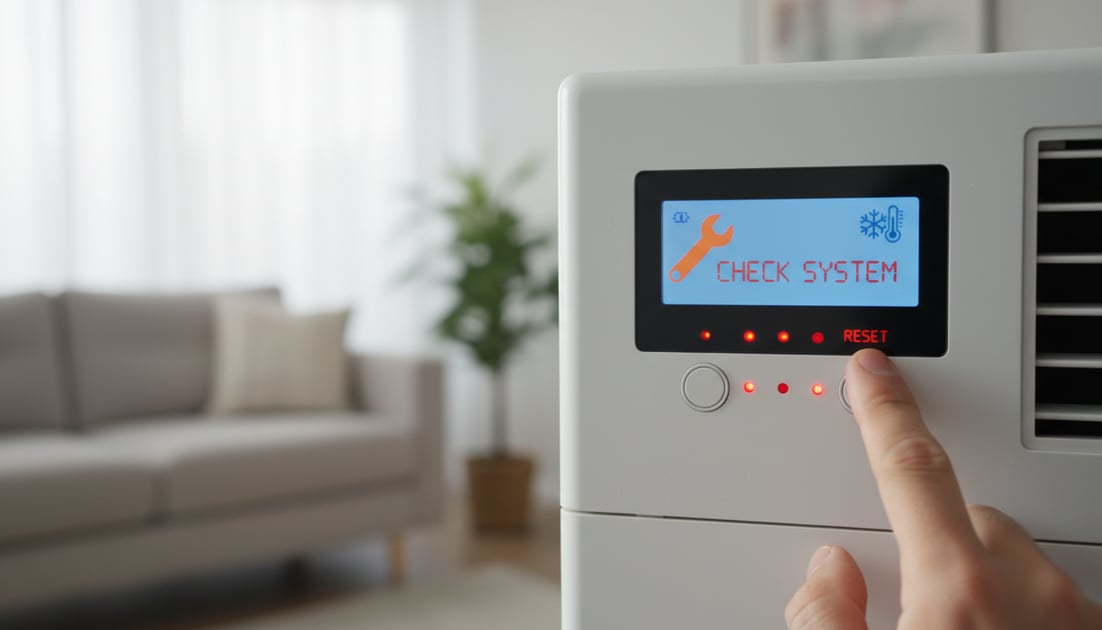
What is the £5000 Rule?
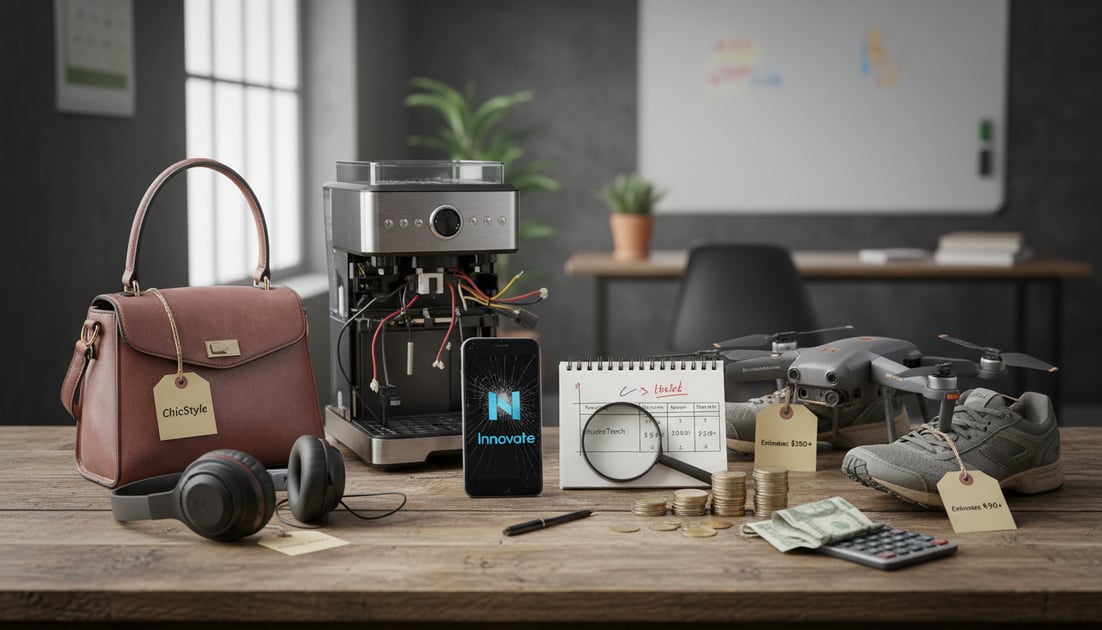
The £5000 rule is a practical calculation framework that helps you decide whether to repair or replace commercial HVAC equipment based on age and repair costs. You multiply the equipment's age in years by the estimated repair cost – if the result exceeds £5000, replacement typically offers better long-term value than continued repairs.
Here's how to apply this decision framework:
Step 1: Calculate Your Equipment's Decision Number
Multiply your system's age by the quoted repair cost. A 12-year-old unit needing £500 in repairs scores 6000 (12 × £500). This number immediately signals whether you're approaching the replacement threshold.
Decision Number = Equipment Age (years) × Repair Cost (£)
If Decision Number > £5000 → Consider Replacement
If Decision Number < £5000 → Repair Usually Cost-Effective
Step 2: Factor in Energy Efficiency Context
Older systems consume significantly more energy. Modern commercial cooling equipment operates 20-30% more efficiently than units over 10 years old. When your decision number sits near £5000, calculate annual energy savings from replacement – this often tips the balance.
Step 3: Assess Refrigerant Compatibility
Systems using phased-out refrigerants face escalating costs. If your HVAC technician quotes premium prices for obsolete refrigerant during a system inspection, factor these recurring expenses into your calculation.
Step 4: Review Equipment Warranties and Remaining Lifespan
Commercial AC units typically last 15-20 years with proper maintenance. A 14-year-old system scoring 4200 might still warrant replacement if it's approaching end-of-life, whilst a 6-year-old unit scoring 5400 deserves AC repair services if well-maintained.
This framework provides clarity, but complex facilities benefit from professional diagnostic assessment considering airflow patterns, planned maintenance history, and facility-specific requirements.
How Often Should Commercial HVAC Units Be Replaced?
Commercial HVAC systems typically require replacement every 12-15 years, though well-maintained units can reach 20 years with consistent preventative care. The replacement timeline depends heavily on your maintenance checklist adherence, system type, and operational demands rather than a fixed schedule.
Air Conditioning units experience the shortest lifespan in this range. Constant cycling during peak seasons accelerates compressor wear, whilst refrigerant regulations force earlier replacement for systems using phased-out coolants. A system inspection at year 10 helps you gauge remaining useful life and plan capital expenditure accordingly.
Energy efficiency drives many replacement decisions before equipment fails completely. Modern commercial cooling systems operate 20-30% more efficiently than decade-old units, meaning a 12-year-old system costs substantially more to run than a new installation. Calculate your annual energy spend – if it's climbed significantly, replacement delivers faster payback through reduced operational costs.
Equipment warranties also influence timing. Most manufacturers offer 5-10 year coverage on major components. Once your system exits warranty protection, repair costs escalate sharply. An HVAC technician can assess whether your ageing unit warrants continued investment or whether planned replacement makes better financial sense.
Don't wait for complete failure. Strategic replacement during off-peak seasons minimises downtime and gives you negotiating leverage, whilst emergency replacements force rushed decisions and premium pricing.
Repair vs Replace: Decision-Making Framework for Facilities Managers
Facilities managers need a systematic approach to the repair or replace decision that goes beyond gut instinct. This framework combines financial analysis with operational factors to deliver defensible recommendations for commercial cooling investments.
Financial Evaluation Matrix
Use this comparison table to assess your situation objectively:
| Factor | Repair | Replace |
|---|---|---|
| Upfront Cost | £500-£3,000 typical | £10,000-£15,000 for commercial units |
| Payback Period | Immediate operational | 3-5 years through energy savings |
| Energy Efficiency | Maintains current consumption | 20-33% reduction in energy costs |
| Equipment Warranties | Limited to repaired components | Full 5-10 year coverage |
| Refrigerant Compliance | Escalating costs for phased-out types | Current regulations compliant |
| Operational Risk | Higher failure probability | Minimal downtime for 5+ years |
ROI Calculation for Replacement Decisions
Calculate your payback period using this formula:
Payback Period (years) = Replacement Cost ÷ Annual Savings
Annual Savings = (Current Energy Cost - New System Energy Cost) + Avoided Repair Costs
Modern systems achieve 33% energy efficiency gains according to commercial installations. A facility spending £6,000 annually on cooling saves roughly £2,000 per year with replacement. Factor in avoided repairs (averaging £800-£1,200 annually for ageing systems), and your payback period shrinks to 4-5 years.
Decision Checklist for Facilities Planning
Work through these questions with your HVAC technician during the diagnostic assessment:
- Does the £5000 rule calculation favour replacement?
- Will refrigerant availability issues drive recurring premium costs?
- Has the maintenance checklist been consistently followed throughout the equipment lifespan?
- Do energy bills show a 15%+ increase compared to three years ago?
- Is the system approaching 12-15 years of age?
Three or more "yes" answers typically justify replacement. Be Cool Air Conditioning evaluates these factors during air conditioning services assessments, providing facilities managers with data-driven recommendations rather than sales-driven pressure.
When should you repair or replace your boiler or AC system? The answer lies in combining financial metrics with operational reality – not arbitrary age thresholds alone.
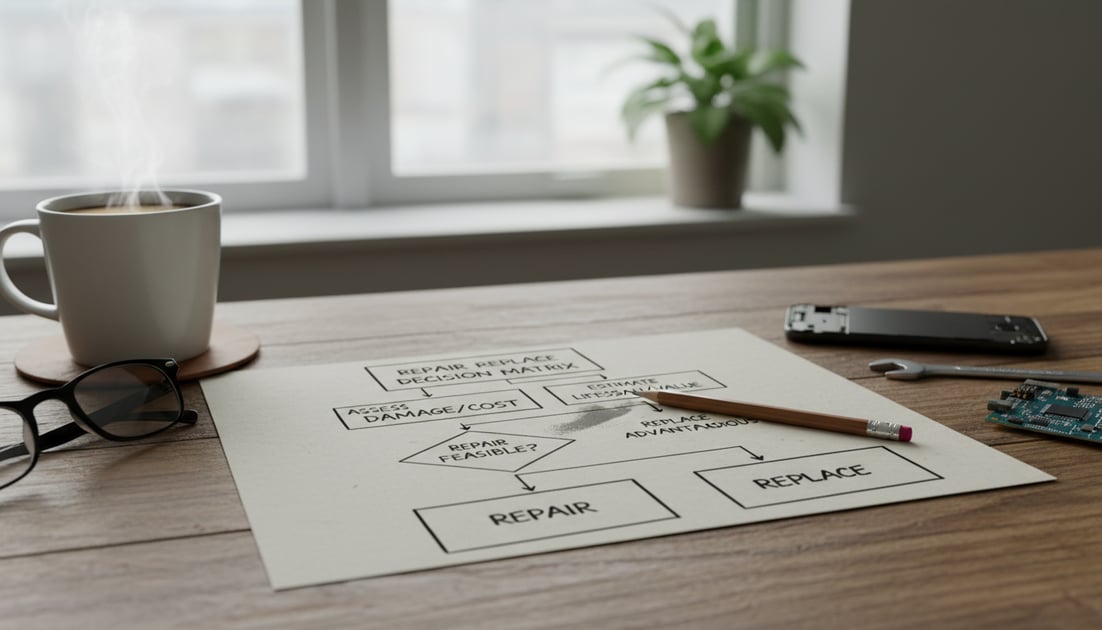
The Middle Ground: Retrofit and Upgrade Options
Full replacement isn't your only path to improved performance. Retrofit solutions and strategic upgrades deliver substantial energy efficiency gains without the capital expenditure of complete system replacement – particularly when your existing infrastructure remains structurally sound.
A Manchester office building faced this exact scenario. Their 11-year-old commercial cooling system worked adequately but consumed excessive energy. Rather than replacing the entire installation, they retrofitted Building Automation Systems (BAS) controls and upgraded to smart thermostats. Energy consumption dropped 18% within six months, delivering £2,400 annual savings for a £6,500 investment – a 2.7-year payback period.
Strategic Retrofit Options Worth Considering:
Building Automation Systems Integration – Smart controls optimise cooling based on occupancy and external temperature. According to the Energy Technology List, BAS retrofits typically achieve 15-25% energy reductions in commercial buildings.
Variable Refrigerant Flow Conversions – VRF technology allows precise zone control and heat recovery. You can retrofit VRF onto existing ductwork in many facilities, gaining modern efficiency without full replacement costs.
Compressor and Control Board Upgrades – Replacing the compressor with a variable-speed model improves efficiency by 20-30% whilst extending equipment lifespan by 5-7 years. Your HVAC technician assesses compatibility during system inspection.
Refrigerant Conversion Kits – Systems using phased-out refrigerants can sometimes accept drop-in replacements or conversion kits, avoiding immediate replacement whilst maintaining compliance.
Be Cool Air Conditioning evaluates retrofit feasibility during diagnostic assessments, identifying which upgrades deliver genuine return on investment versus those that simply postpone inevitable replacement. The right retrofit transforms an ageing system into a cost-effective solution that bridges the gap until planned replacement makes financial sense.
Cost-Benefit Analysis: Calculating Your True ROI
Calculating return on investment accurately requires more than comparing purchase prices. You need a framework that captures total cost of ownership, including energy efficiency gains, avoided repairs, and operational improvements over the equipment's entire lifespan.
Step 1: Calculate Annual Operating Cost Savings
Start with your current utility costs. Modern commercial cooling systems consume 20-33% less energy than units over 10 years old. Multiply your annual cooling expenditure by 0.25 to estimate realistic savings.
Annual Energy Savings = Current Annual Cooling Cost × 0.25
Avoided Repair Costs = Average Annual Repairs (last 3 years)
Total Annual Savings = Energy Savings + Avoided Repairs
A facility spending £8,000 annually on cooling saves approximately £2,000 in energy costs. Add £1,200 in avoided repairs for ageing equipment, and you're looking at £3,200 total annual savings.
Step 2: Determine Simple Payback Period
This calculation shows how quickly your investment pays for itself through operational savings.
Simple Payback Period = Total Replacement Cost ÷ Total Annual Savings
A £15,000 replacement with £3,200 annual savings delivers a 4.7-year payback period. Commercial AC systems last 12-15 years, meaning you'll enjoy 7-10 years of pure savings after recovering your investment.
Step 3: Calculate Total Cost of Ownership
Factor in maintenance checklist costs, equipment warranties, and refrigerant expenses over a 10-year horizon. New systems require minimal maintenance initially, whilst ageing units demand increasing attention from your HVAC technician.
{
  "new_system_10yr_cost": 15000,
  "energy_costs_10yr": 60000,
  "maintenance_10yr": 3000,
  "total_new": 78000,
  "old_system_10yr_cost": 0,
  "energy_costs_10yr": 80000,
  "repairs_maintenance_10yr": 12000,
  "total_old": 92000,
  "net_savings": 14000
}
This reveals the true financial impact. Keeping your old system costs £14,000 more over the next decade – money that disappears into energy waste and emergency callouts rather than building value.
How Can Facility Managers Ensure Proper HVAC Maintenance?
Proper HVAC maintenance extends equipment lifespan by 40-50% whilst preventing costly emergency failures. Facilities managers need structured protocols that address both immediate performance and long-term system health through consistent preventative care.
Implement Quarterly System Inspections – Schedule comprehensive assessments every three months with a qualified HVAC technician. These inspections identify declining airflow, refrigerant levels, and electrical connections before they escalate into failures. Predictive maintenance strategies reduce equipment downtime by up to 25% according to European HVAC industry data.
Establish a Monthly Filter Change Schedule – Dirty filters restrict airflow and force systems to work 15-20% harder. Replace or clean filters monthly during peak cooling seasons and every 60 days during moderate use. This single action delivers immediate energy efficiency improvements.
Document Maintenance History Rigorously – Track every tune-up, filter change, and repair in a centralised maintenance checklist. This documentation proves invaluable during repair or replace decisions, showing whether declining performance stems from neglect or genuine equipment age.
Schedule Annual Professional Tune-Ups – Comprehensive annual servicing includes refrigerant checks, coil cleaning, and calibration adjustments that maintain optimal system efficiency. Be Cool Air Conditioning structures these tune-ups around your operational calendar to minimise disruption.
Monitor Energy Consumption Patterns – Track monthly energy bills for unusual spikes. A sudden 10-15% increase signals developing issues requiring immediate diagnostic assessment before minor problems become major failures.
Consistent maintenance transforms commercial cooling from a reactive expense into a managed asset with predictable performance and extended service life.
What Are the 4 P's of Maintenance?
The 4 P's of maintenance – Predictive, Preventive, Proactive and Productive – create a comprehensive framework that transforms equipment management from reactive firefighting into strategic asset planning. This approach directly impacts your repair or replace decisions by revealing whether poor performance stems from maintenance neglect or genuine equipment failure.
Predictive maintenance uses system inspection data to forecast failures before they occur. Your HVAC technician monitors refrigerant pressures, airflow patterns and energy consumption trends to identify declining performance early.
Preventive maintenance follows a scheduled maintenance checklist – quarterly filter changes, annual tune-ups and regular coil cleaning that extend equipment lifespan by 40-50%.
Proactive maintenance addresses root causes rather than symptoms. When energy efficiency drops, proactive strategies investigate ductwork design or control calibration issues instead of repeatedly patching components.
Productive maintenance optimises system performance through continuous improvement. This includes retrofit evaluations and upgrade assessments that maximise return on your commercial cooling investment.
Facilities managers who apply all four P's make better-informed decisions. A well-maintained 12-year-old system might warrant continued operation, whilst a neglected 8-year-old unit demands replacement. The framework reveals the difference.
Emergency Breakdown vs Planned Replacement: Two Different Strategies
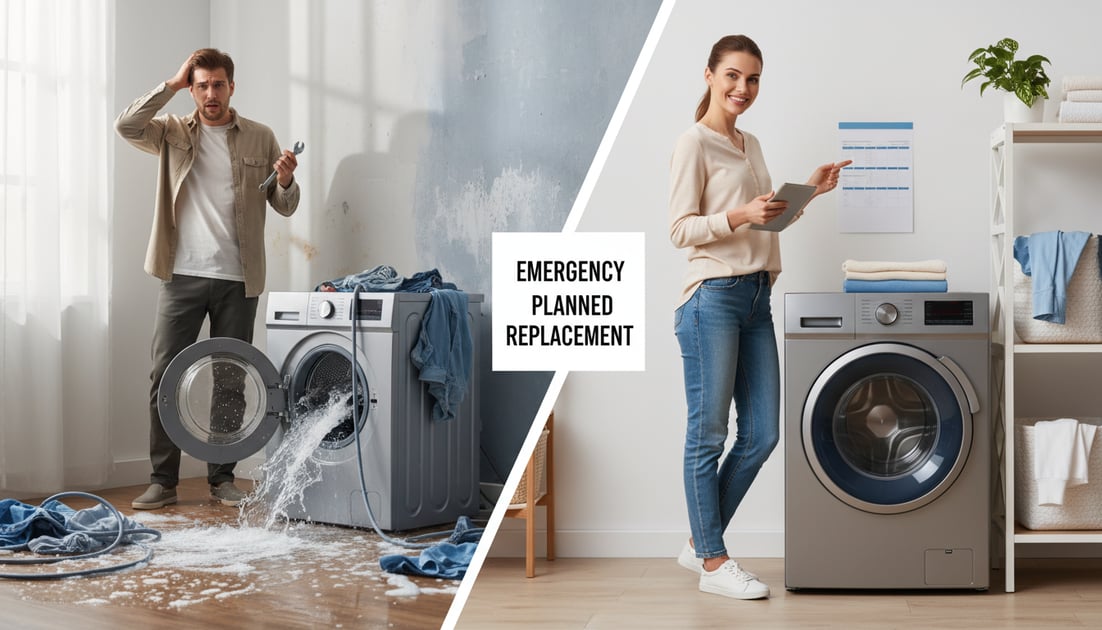
Emergency breakdowns and planned replacements represent fundamentally different approaches to commercial cooling management. The strategy you choose directly impacts costs, downtime, and long-term facility planning outcomes.
Emergency breakdowns force reactive decisions under pressure. Your system fails during peak cooling season, leaving you scrambling for immediate solutions. You'll pay premium rates for urgent callouts, accept whatever equipment your HVAC technician has available, and sacrifice negotiating leverage. Downtime costs compound quickly – lost productivity, uncomfortable occupants, and potential damage to temperature-sensitive equipment.
Planned replacement follows a strategic timeline based on system inspection data and maintenance checklist history. You schedule AC installation during off-peak periods, compare multiple quotes, and select equipment that matches your facility's specific requirements. This approach delivers 20-30% cost savings compared to emergency scenarios whilst minimising operational disruption.
The financial difference proves substantial. Emergency replacements typically cost £12,000-£18,000 for commercial units due to rushed timelines and limited supplier options. Planned replacements for identical equipment run £10,000-£14,000 with better equipment warranties and installation quality.
Partnering with a contractor for regular diagnostic assessments transforms your approach from reactive to proactive. You'll identify declining energy efficiency and approaching failures months in advance, giving you control over timing and budget rather than letting equipment dictate your decisions.
| Strategy | Emergency Breakdown | Planned Replacement |
|---|---|---|
| Timeline | Immediate (24-48 hours) | Flexible (4-12 weeks) |
| Cost Premium | 15-25% above standard | Standard market rates |
| Equipment Choice | Limited to stock availability | Full specification control |
| Downtime | 3-7 days typical | 1-2 days scheduled |
| Installation Quality | Rushed under pressure | Thorough and optimised |
The choice seems obvious. Yet many facilities managers still operate reactively, waiting for complete failure before addressing declining performance. Strategic planning pays dividends.
Regulatory Considerations: R-22 Phase-Out and Compliance Requirements
R-22 Refrigerant has been completely banned in the UK under F-Gas Regulations, making any commercial AC system still running this coolant non-compliant and subject to mandatory replacement. The Montreal Protocol eliminated R-22 production and import by the early 2010s, yet thousands of facilities still operate legacy systems that now face escalating compliance risks and supply constraints.
You cannot legally top up R-22 systems with virgin refrigerant. Reclaimed supplies exist but command premium prices – often 300-400% above historical costs – making even minor leak repairs financially unviable. This regulatory reality fundamentally changes your repair or replace calculation. A system requiring refrigerant replenishment demands immediate replacement regardless of the £5000 rule outcome.
Indoor air quality concerns compound the issue. Ageing R-22 systems with declining refrigerant levels struggle to maintain proper airflow and humidity control, creating environments conducive to mould growth and poor ventilation. DEFRA's ongoing HFC phase-down consultation signals further tightening, with lower global warming potential refrigerants like A2L and CO₂ becoming mandatory for new installations. Facilities managers planning capital expenditure should prioritise compliant refrigerants that won't face obsolescence within the equipment's 12-15 year lifespan.
Making the Right Decision for Your Facility's Future
The repair or replace decision ultimately hinges on three factors: your equipment's age and condition, the financial analysis showing true return on investment, and your facility's operational requirements. Apply the £5000 rule calculation, assess energy efficiency gaps against modern systems, and review your maintenance checklist history to determine whether your commercial cooling equipment warrants continued investment or strategic replacement.
Systems approaching 12-15 years with declining airflow and rising energy costs typically justify replacement, whilst younger units with isolated component failures respond well to targeted repairs. The framework provided – combining ROI calculations, payback period analysis, and operational risk assessment – gives you defensible recommendations that balance capital expenditure against long-term value.
Be Cool Air Conditioning helps facilities managers navigate these decisions through comprehensive diagnostic assessments that evaluate system performance, refrigerant compliance, and energy efficiency opportunities. Our HVAC technicians provide data-driven recommendations focused on your facility's specific requirements rather than sales-driven pressure.
Ready to make an informed decision about your commercial AC system? Contact Be Cool Air Conditioning for a professional system inspection and customised cost-benefit analysis that clarifies your best path forward.
Frequently Asked Questions
How can facility managers ensure proper HVAC maintenance?
Facility managers should schedule routine inspections, clean or replace air filters, and address minor issues before they escalate into major repairs. By ensuring the HVAC system operates at peak performance, building managers can create a comfortable, healthy, and productive environment for all occupants.
What are the 4 P's of maintenance?
The 4 P's of maintenance are People, Processes, Parts, and Performance, and each one is crucial to maintaining equipment reliability and efficiency. By understanding these four elements, businesses can reduce breakdowns and lower repair costs.
How often should commercial HVAC units be replaced?
Commercial HVAC Equipment's Expected Lifespan
If you keep up with suggested maintenance, the average life expectancy of commercial HVAC systems is 15 to 20 years.
What is the $5000 rule?
So what is the $5,000 rule? Simply multiply the age of your AC unit by the repair cost, and if that exceeds $5,000, then replace the unit. If less, go ahead and repair it. For example, if your unit is 10 years old and the repair will cost $350, multiply 10 x 350 to equal $3,500.