What to expect from professional AC installation in 2026
By Be Cool Air Conditioning 14 min read
Why Professional AC Installation Matters More Than Ever in 2026
The UK just recorded its warmest year on record in 2025, with temperatures hitting 10.09°C and four consecutive summer heat waves. Climate change isn't coming – it's here. That makes professional AC installation more critical than you might think.
Regulatory changes are reshaping the industry overnight. From 2027, strict Global Warming Potential limits apply to new cooling systems under F-gas regulations, meaning your technician needs current certification to handle low-GWP refrigerants like R454B. Get this wrong and you'll face compliance issues before your system even starts.
Technology has evolved dramatically too. Smart thermostats and IoT-enabled systems now dominate the market, with UK HVAC services capturing 33.45% of revenue specifically because installations have become more complex. You're not just mounting a unit anymore – you're integrating climate control with your home's digital ecosystem.
Energy efficiency directly impacts your running costs for the next decade. Professional installation ensures proper insulation, optimal airflow, and correct refrigerant charging. These details determine whether your system delivers promised SEER ratings or quietly drains your wallet each summer. One miscalculation during installation can cost you hundreds annually in wasted energy.
Will HVAC Systems Cost More in 2026?
Yes, expect AC installation costs to rise between 8-12% in 2026 compared to 2025 levels. Several factors are driving prices upward, and understanding them helps you budget realistically.
Refrigerant regulations create the biggest impact. The 2027 F-gas compliance deadline means manufacturers are transitioning to low-GWP alternatives now, and these newer refrigerants cost more to produce and require specialised handling. Labour costs are climbing too – technicians need updated certification for R454B and similar refrigerants, and that expertise commands premium rates.
Material shortages haven't disappeared either. Global supply chains for copper piping and electronic components remain unpredictable, adding 5-8% to equipment costs. Energy efficiency standards are tightening simultaneously, pushing manufacturers toward higher-SEER systems that cost more upfront but deliver long-term savings.
Here's what you can expect to pay for air conditioning installation in 2026:
| System Type | 2025 Range | 2026 Projection |
|---|---|---|
| Single-split system | £1,500-£3,500 | £1,650-£3,850 |
| Multi-split system | £3,000-£6,500 | £3,300-£7,150 |
| Ducted system | £5,000-£12,000 | £5,500-£13,200 |
Be Cool Air Conditioning recommends requesting quotes now if you're planning installation within six months. Prices typically increase in spring when demand surges, and locking in winter rates could save you hundreds. Smart thermostat integration and heat pump compatibility add £300-£800 to installation costs, but they improve energy efficiency significantly – reducing your operating expenses by up to 25% annually.
What Professional AC Installation Includes in 2026
Professional AC installation in 2026 covers far more than mounting a unit and connecting pipes. Regulatory changes and technological advances have transformed what you should expect from certified technicians.
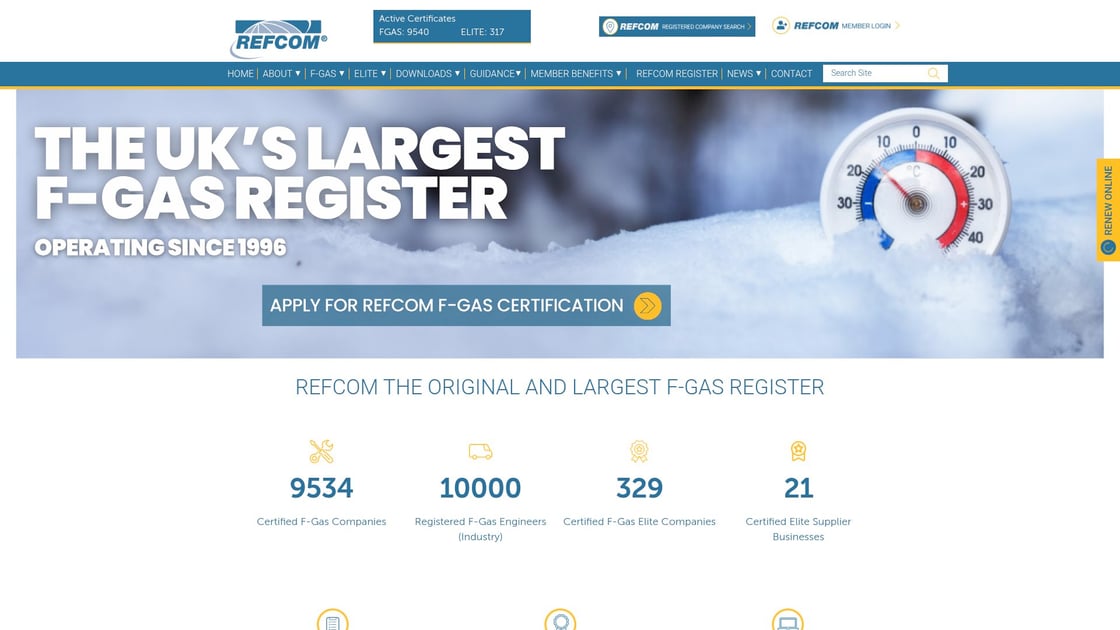
1. F-Gas Certification and REFCOM Compliance – Every technician handling your installation must hold current REFCOM certification to legally work with refrigerants. This isn't optional. From 2027, strict Global Warming Potential limits apply to new systems, meaning your installer needs specific training for low-GWP refrigerants like R454B. Professional installation includes verification of these credentials before work begins, protecting you from compliance issues and potential fines.
2. Site Survey and Load Calculation – Your installer assesses room dimensions, insulation quality, sun exposure, and heat sources to calculate precise cooling requirements. This determines the correct system capacity. Oversized units waste energy and create humidity problems. Undersized ones run constantly and fail prematurely.
3. Smart Home Integration – Modern installations connect your cooling system to Wi-Fi networks and smart thermostats as standard. This integration enables remote control, scheduling, and energy monitoring through your smartphone. Professional air conditioning services configure these systems properly, ensuring compatibility with existing home automation platforms.
4. Refrigerant Line Installation and Insulation – Technicians install copper piping with precise bends, proper insulation, and leak-free connections. They charge the system with exact refrigerant quantities specified by manufacturers. Even 10% overcharging reduces energy efficiency by up to 20% and shortens compressor life.
5. Electrical Work and Safety Testing – Installation includes dedicated circuit installation, proper earthing, and full electrical safety certification. Your installer tests voltage levels, current draw, and circuit protection to prevent fire risks and system damage.
What's typically excluded: decorative covers for external pipework, additional electrical panel upgrades if your home's capacity is insufficient, structural modifications beyond standard wall penetrations, and servicing contracts beyond the initial commissioning.
How Long Does It Take a Professional to Install an Air Conditioner?
Professional AC installation typically takes 4-8 hours for a single-split system and 8-16 hours for multi-split or ducted installations in residential properties. Commercial systems require 2-5 days depending on complexity. Understanding this timeline helps you plan around disruption and set realistic expectations.
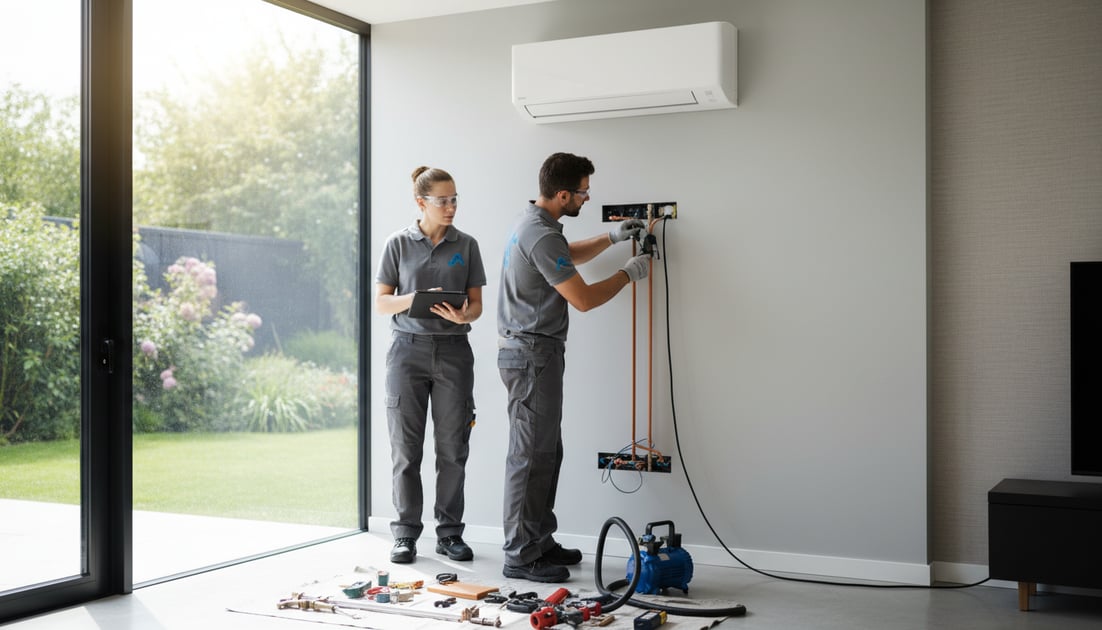
Step 1: Site Preparation and Safety Setup (30-60 minutes) – Your technician arrives with all necessary equipment and performs a final site assessment. They establish safe working areas, protect flooring and furniture, and confirm electrical supply capacity. This stage includes marking wall penetration points and verifying measurements from the initial survey.
Step 2: Indoor Unit Installation (1-2 hours) – The indoor unit gets mounted securely to your wall or ceiling with specialist brackets. Technicians drill precise holes for refrigerant lines and drainage pipes, ensuring proper angles for condensate flow. Smart thermostat wiring gets connected during this phase if you're integrating climate control with home automation.
Step 3: Outdoor Unit Positioning (1-2 hours) – The condenser unit requires a stable base, proper clearance for airflow, and secure mounting. Your installer runs refrigerant lines through walls with careful insulation to maintain energy efficiency. This step takes longer for multi-split systems serving multiple rooms.
Step 4: Refrigerant Charging and Testing (2-3 hours) – Technicians vacuum the system to remove moisture, then charge it with exact refrigerant quantities. They test for leaks, verify electrical connections, and commission the system through multiple cooling cycles. Be Cool Air Conditioning includes full performance testing to confirm your system meets manufacturer specifications before completion.
Commercial AC installation in London extends this timeline significantly. A small office might need 2-3 days, whilst larger commercial properties require 3-5 days for ducted systems with multiple zones. If you're planning installation, contact us early to schedule around your business operations and minimise disruption.
Are AC Units Changing in 2025? Technology and Regulations You Need to Know
Yes, AC units are changing dramatically in 2025, driven by refrigerant regulations, energy efficiency standards, and smart home integration. These shifts affect what you can buy, how much it costs, and what performance you'll receive.
Refrigerant Transitions and F-Gas Compliance – R32 refrigerant has become the industry standard for new installations this year. Japanese and Korean manufacturers are investing heavily in UK test labs to certify R32 systems meeting 2030 F-gas quotas, whilst companies like Samsung have launched modular chillers specifically aligned with evolving UK regulations. R32 offers a Global Warming Potential of 675, significantly lower than older R410A refrigerant. From January 2027, stricter limits apply – heat pump systems between 12kW and 50kW must use refrigerants with GWP below 150, pushing the industry toward R454B and similar alternatives.
SEER Standards Tightening – EU Regulation 2024/573 now bans refrigerants with GWP above 750 in new heat pump systems, forcing manufacturers to redesign units for both compliance and energy efficiency. Modern systems achieve higher Seasonal Energy Efficiency Ratio ratings than previous generations, with some models performing efficiently down to -10°C. This matters for your running costs – higher SEER ratings translate directly to lower electricity consumption.
Smart Thermostat Integration – Smart heating controls have become standard rather than optional in 2025 installations. Wi-Fi connectivity, remote scheduling, and energy monitoring integrate seamlessly with cooling systems, giving you precise climate control from your smartphone. Professional installers now configure these systems as part of standard installation packages.
Heat pump technology is evolving rapidly too. The UK government extended 0% VAT on domestic heat pump supply and installation until at least March 2027, making reversible heat pump systems financially attractive for year-round climate control. You're not just buying cooling anymore – you're investing in comprehensive energy efficiency that works through winter.
Planning Permission and Legal Requirements for UK AC Installation
Most residential AC installations in England don't require planning permission under permitted development rights, but size and placement restrictions apply strictly. Your outdoor unit must not exceed 1.5 cubic metres for houses or 0.6 cubic metres for flats to qualify for exemption. Position matters too – whilst the 1 metre boundary rule for air-source heat pumps has been removed in England, you still need to consider noise regulations and neighbour proximity.
Noise level compliance is mandatory regardless of planning status. MCS 020 sets maximum sound-level limits of less than 42 decibels measured at your nearest neighbour's window for heat pump systems. This roughly equals a quiet library. Your installer should provide noise assessments during the site survey, particularly for outdoor units near property boundaries. Exceeding these limits can trigger noise abatement notices from local authorities, forcing expensive remediation work.
Listed buildings and conservation areas change everything. You'll need formal planning permission for any external alterations in these protected zones, and councils often reject visible outdoor units entirely. Some authorities require acoustic reports demonstrating compliance before approving applications. Processing takes 8-12 weeks typically, so factor this into your installation timeline.
F-gas regulations add another compliance layer. Your technician must hold current REFCOM certification to legally handle refrigerants in any AC installation. From 2027, stricter GWP limits apply to new systems, meaning installers need specific training for low-GWP refrigerants like R454B. Professional services verify these credentials before starting work, protecting you from potential fines reaching £200,000 for non-compliant installations.
Check with your local planning authority before proceeding. Rules vary between England, Scotland, Wales, and Northern Ireland, and individual councils interpret permitted development differently.
Smart Home Integration and IoT Features in 2026 Cooling Systems
Smart thermostat integration has become standard in professional AC installations, transforming how you control climate in your home. The UK HVAC market is reaching £2.77 billion in 2026, driven largely by IoT-enabled systems that deliver genuine energy savings – Honeywell Home thermostats alone reduce cooling energy consumption by 17% through optimised scheduling.
1. Wi-Fi Connectivity and Remote Control – Modern cooling systems connect to your home network as standard, enabling smartphone control from anywhere. You can adjust temperatures whilst commuting home, monitor energy usage in real-time, and receive maintenance alerts before issues escalate. This isn't convenience alone – remote access prevents wasted energy when you're away unexpectedly.
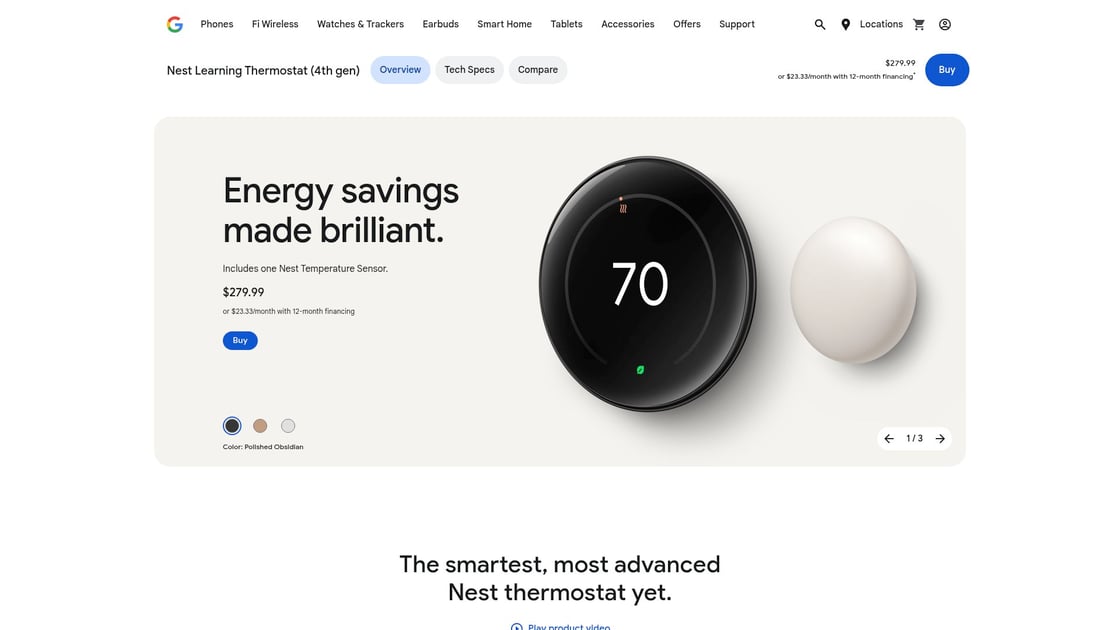
2. Smart Thermostat Learning Algorithms – Systems like the Nest Learning Thermostat study your preferences and occupancy patterns, automatically adjusting cooling schedules without manual programming. They detect when you're home, learn your temperature preferences throughout the day, and optimise energy efficiency accordingly. Installation cost increases by £300-£800 for smart thermostat integration, but annual operating savings of up to 25% offset this investment quickly.
3. Air Quality Monitoring Integration – Advanced cooling systems now incorporate sensors tracking humidity levels, particulate matter, and indoor air quality metrics. These sensors trigger ventilation adjustments automatically, maintaining optimal conditions without your intervention. Professional installation ensures proper sensor placement and calibration during commissioning.
4. Voice Control and Home Automation – Compatibility with Alexa, Google Home, and Apple HomeKit allows voice commands for temperature adjustments. Your cooling system integrates with existing smart home routines – lights dim, blinds close, and temperature drops when you activate "cinema mode" through a single command.
What Is the 3 Minute Rule for Air Conditioners?
The 3-minute rule requires waiting at least three minutes after turning off your air conditioner before restarting it. This protects your compressor from damage caused by pressure imbalances inside the refrigerant system.
When your AC shuts down, refrigerant pressure remains high on one side of the compressor and low on the other. Restarting immediately forces the motor to work against this pressure difference, drawing surge power up to 7,200W briefly and straining electrical components. Three minutes allows pressures to equalise naturally, reducing startup stress significantly.
Professional installation includes built-in time-delay relays that enforce this rule automatically. You won't damage modern systems by flipping switches quickly – the relay prevents compressor restart until safe. Older units lack this protection, making manual adherence critical.
This matters for long-term system performance. Frequent short-cycling from ignoring the rule shortens compressor lifespan and increases energy consumption. Your technician tests these safety features during commissioning, ensuring proper operation from day one. Proper servicing maintains relay function throughout your system's life, protecting your investment without requiring constant vigilance.
Post-Installation: Maintenance Schedules and Running Costs
Understanding long-term ownership costs helps you budget realistically beyond installation day. Your AC system requires regular servicing to maintain energy efficiency and prevent expensive breakdowns. Neglecting maintenance reduces cooling performance by up to 15% annually whilst increasing electricity consumption significantly.
Professional servicing schedules follow manufacturer guidelines strictly. You need annual inspections covering refrigerant levels, electrical connections, condensate drainage, and filter cleaning. These appointments typically cost £80-£150 for residential systems, depending on complexity. Multi-split systems serving multiple rooms require more extensive checks, pushing servicing costs toward the upper range. Commercial properties need quarterly maintenance visits to comply with F-gas regulations and warranty requirements.
Running costs vary dramatically based on system efficiency and usage patterns. A modern split system with SEER rating above 18 costs approximately £35-£65 monthly to operate during summer months, assuming 8 hours daily usage. Older units with lower efficiency ratings can double these figures. Smart thermostat integration reduces consumption by 17-25% through optimised scheduling, offsetting the initial £300-£800 installation premium within two cooling seasons.
| Maintenance Item | Frequency | Typical Cost |
|---|---|---|
| Professional servicing | Annual | £80-£150 |
| Filter replacement | Quarterly | £15-£30 |
| Refrigerant top-up | As needed | £100-£200 |
Warranty coverage affects your maintenance budget considerably. Most manufacturers require proof of annual servicing to maintain warranty validity. Missing scheduled maintenance voids coverage entirely, leaving you responsible for air conditioning repairs that could reach £500-£1,500 for compressor failures. Track servicing dates carefully and keep documentation accessible.
Choosing the Right Installer: Certifications and Credentials to Look For
Not all installers are qualified to handle modern cooling systems legally. Regulatory changes and refrigerant transitions mean you need specific credentials verified before work begins. Here's what separates professional installers from those cutting corners.
1. F-Gas Certification – Your installer must hold current F-Gas certification to legally handle refrigerants in any AC installation. This isn't negotiable. The certificate proves they've completed recognised training in refrigerant handling, leak detection, and environmental compliance. Ask to see it before signing contracts. Installers without valid certification face fines up to £200,000, and you'll inherit compliance issues if work isn't done properly.
2. REFCOM Registration – REFCOM registration demonstrates compliance with UK refrigerant handling regulations and industry standards. This independent body maintains registers of certified technicians and businesses. You can verify your installer's status online through their database. Only around 3,000-4,000 qualified specialists are available in the UK against needs for tens of thousands by 2028, making verified credentials crucial for finding genuinely skilled technicians.
3. Electrical Safety Certification – Professional installers hold NICEIC, NAPIT, or ELECSA registration for electrical work self-certification under Building Regulations. AC installation requires dedicated circuits, proper earthing, and safety testing. These certifications prove your technician can complete electrical work legally without separate contractors, saving time and ensuring integrated system safety.
4. Manufacturer Training – Leading installers maintain manufacturer-specific certifications for brands they install. This training covers system-specific installation procedures, smart thermostat integration, and warranty requirements. Manufacturer certification often extends warranty coverage beyond standard terms, protecting your investment long-term.
Making the Right Choice for Your 2026 AC Installation
Professional AC installation in 2026 means more than mounting equipment – it's about securing long-term energy efficiency, regulatory compliance, and reliable climate control through increasingly warm UK summers. The decisions you make now determine your comfort and running costs for the next decade.
Choosing certified technicians with current F-gas and REFCOM credentials protects you from compliance issues and ensures proper handling of modern low-GWP refrigerants. Smart thermostat integration, whilst adding £300-£800 to installation costs, delivers annual energy savings of 17-25% that quickly offset the initial investment. Proper refrigerant charging, precise load calculations, and professional electrical work separate installations that perform as promised from those that quietly drain your wallet through inefficiency.
The right installer provides transparent pricing, manufacturer-specific training, and comprehensive warranties that protect your investment. Annual servicing costs £80-£150 but maintains system performance and prevents expensive breakdowns that can reach £1,500 for major component failures.
Be Cool Air Conditioning combines over 20 years of experience with current certifications for modern refrigerants and smart home integration. Our technicians deliver complete installations that meet 2026 regulatory standards whilst optimising energy efficiency for your specific property.
Ready to discuss your AC installation? Contact our team for a detailed quote and site assessment tailored to your cooling requirements.
Frequently Asked Questions
Will HVAC systems cost more in 2026?
Forecasted HVAC Replacement Costs for 2026
That's an increase of about $1,000–$1,200 per system compared to 2025.
How long does it take a professional to install an air conditioner?
Split systems are generally quicker to install than ducted systems, while window units are the fastest. For example, a split system might take 4-8 hours, a ducted system could require 3-5 days, and a window unit might be installed in 1-2 hours.
Are AC units changing in 2025?
Come 2025, the Environmental Protection Agency (EPA) will set a 750 global warming potential (GWP) limit for air conditioning. This means that R-410A, with a GWP of 2,088, will no longer be able to be used in new equipment.
What is the 3 minute rule for air conditioners?
The 3-minute rule for air conditioners is a guideline to wait at least three minutes after turning the unit off before turning it back on, to allow refrigerant pressure to equalize, preventing strain and potential damage to the expensive compressor, thus extending the unit's lifespan and avoiding costly repairs from short-cycling. This simple pause protects the system's heart, the compressor, from electrical surges and high-pressure starts, which can cause premature failure.