
5 essential DIY troubleshooting before calling emergency AC repair steps that save you money
By Be Cool Air Conditioning 11 min read
When Your AC Fails: DIY Checks That Save Money
It's a sweltering summer afternoon when your air conditioning suddenly stops working. Your first instinct might be to ring for emergency ac repair immediately, but that call-out could cost you significantly more than necessary.
Many Heating, Ventilation and Air Conditioning (HVAC) malfunctions stem from simple issues that homeowners can diagnose themselves. Before scheduling an ac repair service, spending just ten minutes on basic troubleshooting steps could save you hundreds of pounds in unnecessary emergency fees. A tripped circuit breaker, incorrect thermostat settings, or a clogged filter might be the only culprits preventing your system from functioning properly.
Understanding which checks to perform yourself helps you make informed decisions about when professional help is genuinely required. Some situations absolutely warrant immediate expert attention, whilst others simply need a quick adjustment you can handle independently. The key is knowing the difference before reaching for your phone.
What is the first step in troubleshooting an air conditioning system?
Your thermostat serves as the command centre for your entire cooling system, making it the logical starting point for any air conditioning repair diagnosis. Before investigating more complex components, checking this control interface takes mere minutes and resolves approximately 30% of reported AC issues.
Start by examining the display screen. A blank or flickering screen typically indicates dead batteries, particularly in wireless models. Replace batteries with fresh ones, ensuring correct polarity. Even hardwired thermostats sometimes contain backup batteries that require changing.
Next, verify your temperature settings. Your thermostat should be set to 'cool' mode with the target temperature at least three degrees below the current room temperature. Accidentally switching to 'heat' or 'off' happens more frequently than you'd expect, especially in households with children or elderly residents.
Check the programming schedule if you have a programmable model. Incorrect time settings or unintended programming changes can prevent your system from operating when needed. Many thermostat issues stem from programming conflicts rather than mechanical failures.
Finally, confirm the circuit breaker hasn't tripped. Locate your electrical panel and check both the AC unit breaker and thermostat breaker if separate. A tripped breaker appears in the middle position between 'on' and 'off'.
These straightforward thermostat checks require no technical expertise yet eliminate common culprits before you investigate refrigerant levels, compressors, or ductwork. If your AC still won't respond after these verifications, you've established valuable information for the technician and can confidently proceed to the next troubleshooting step.
Check Your Power Supply and Circuit Breakers
Electrical supply disruptions account for a substantial portion of air conditioning failures that appear more serious than they actually are. Your electrical panel holds vital clues about whether your system has lost power rather than suffered mechanical damage.
Locate your consumer unit, typically found in hallways, under stairs, or garages. Scan the breaker switches for your AC system – outdoor condensers usually have dedicated circuits rated between 15-30 amps depending on unit size. A tripped breaker sits in a neutral middle position or displays a red indicator, not flush with other 'on' switches.
Before resetting, switch the breaker fully to the 'off' position first, wait thirty seconds, then push firmly to 'on'. This complete cycle ensures proper reset. Never force a resistant breaker or repeatedly reset one that trips immediately, as this signals potentially dangerous electrical faults requiring AC repair services.
If your breaker trips again within minutes, disconnect other appliances sharing the same circuit. Overloaded circuits sometimes occur when running multiple high-draw devices simultaneously. However, a breaker that continues tripping with only your AC connected indicates serious concerns – faulty wiring, compressor issues, or refrigerant leaks creating electrical shorts.
Safety warning: Never touch electrical panels with wet hands or whilst standing on damp surfaces. If you notice burning smells, charring around breakers, or buzzing sounds, contact a qualified electrician immediately rather than attempting resets.
Successful breaker reset with sustained operation suggests a temporary power surge caused the interruption. Persistent tripping requires professional diagnosis to prevent equipment damage or fire hazards.
Inspect and Replace Air Filters
Clogged filters represent one of the most common yet overlooked causes of AC performance decline. Research demonstrates that dirty filters restrict airflow by up to 50%, forcing your system to work considerably harder whilst delivering weaker cooling. This increased strain raises energy consumption by 5-15% and accelerates wear on critical components.
Locating your filter depends on your system configuration. Most split systems position filters behind the indoor unit's front panel, which typically clips off without tools. Ducted systems often house filters in return air grilles or within the air handler unit itself. Remove the filter and hold it towards light – if you cannot see through it clearly, replacement is overdue.
UK homeowners typically choose between three filter types. Fibreglass filters offer basic protection at lower cost but require monthly changes. Pleated filters provide superior particle capture and last 60-90 days in standard households. HEPA filters deliver hospital-grade filtration but may restrict airflow in older systems not designed for higher resistance.
Replacement frequency varies with household conditions. Homes with pets or allergy sufferers should change filters every 30-45 days. Standard UK households without pets manage adequately with 60-90 day intervals. Mark your calendar as a reminder – this simple maintenance step prevents many situations requiring professional intervention.
If replacing a visibly soiled filter doesn't restore proper cooling, you've eliminated another variable before you schedule AC repair services.
What is the 3 minute rule for AC?
The three-minute rule requires waiting at least three minutes between switching your air conditioning system off and back on again. This brief delay protects your compressor from potentially catastrophic damage that could necessitate costly emergency ac repair services.
When your AC operates, refrigerant pressure equalises slowly after shutdown. Restarting immediately forces the compressor to work against this high-pressure differential, creating enormous strain on the motor. This stress can damage internal components, shorten system lifespan, or cause complete compressor failure – the most expensive repair homeowners face.
Modern systems incorporate built-in delay timers that prevent premature restarts, but older units lack this protection. If you're manually controlling power via circuit breakers during troubleshooting, always observe this interval. Patience during those three minutes could prevent a £1,500-2,500 compressor replacement.
This principle applies whether you've intentionally switched off your system or experienced a power interruption. After electrical outages, resist the temptation to immediately restore cooling. The same pressure equalisation process occurs regardless of why your system stopped.
If your AC requires frequent restarts to maintain operation, this signals underlying issues requiring professional diagnosis. Repeated cycling strains components even when following the three-minute guideline. Contact an ac repair service to identify why your system won't run continuously.
Clear Outdoor Unit Obstructions
Your outdoor condenser works relentlessly to expel heat from your home, but accumulated debris can reduce efficiency by up to 30% whilst triggering system shutdowns that mimic serious malfunctions.
Begin by switching off power at your consumer unit before approaching the outdoor unit. Examine the area within 60cm of the condenser – manufacturers recommend this minimum clearance for adequate airflow. Remove fallen leaves, grass clippings, twigs, and windblown rubbish that restrict air intake through the metal fins. In UK gardens, autumn brings particular challenges as deciduous trees shed leaves that quickly accumulate around ground-level units.
Vegetation grows rapidly during British spring and summer months. Trim back shrubs, hedges, and climbing plants encroaching on your unit. Whilst landscaping around condensers improves aesthetics, overgrown greenery blocks airflow and traps moisture against components, accelerating corrosion in our damp climate.
Gently spray the external fins with a garden hose from inside outward, never using pressure washers that bend delicate aluminium. Bent fins obstruct airflow just as effectively as debris. If fins appear damaged, inexpensive plastic fin combs straighten minor distortions.
Check for signs of pest activity – birds occasionally nest atop units during spring, whilst rodents seek shelter underneath during winter. Wire mesh guards prevent wildlife from accessing internal components without restricting necessary ventilation.
Seasonal maintenance aligns with UK weather patterns. Inspect before summer cooling season begins and after autumn leaf fall concludes. These brief checks prevent overheating that forces emergency shutdowns, helping you avoid urgent air conditioning repair calls during peak demand periods when availability tightens and costs increase.
Condensate Drain Line Maintenance
Your air conditioning system generates condensation as it removes humidity from indoor air. This moisture drains through a dedicated pipe, typically routed outdoors or into your plumbing system. When functioning correctly, this drainage operates invisibly – you'll never notice it working.
Blockages develop gradually as algae, mould, and dust accumulate inside the drain line. Warning signs include water pooling near your indoor unit, musty odours when your AC operates, or the system shutting down unexpectedly. These symptoms indicate your condensate drain requires attention before water damage occurs.
For preventative clearing, pour 250ml of distilled white vinegar into the drain access point quarterly. The acidity dissolves organic buildup without harsh chemicals. Allow the vinegar to sit for 30 minutes before flushing with water. This simple routine prevents most blockages in UK climates where humidity levels fluctuate seasonally.
If water backs up despite vinegar treatment, locate the external drain outlet and check for visible obstructions. Sometimes leaves or debris block the exit point. Never insert objects into the drain line, as this risks damaging internal components.
Persistent drainage problems, repeated system shutdowns, or water stains on ceilings require professional assessment. Technicians use specialised equipment to clear stubborn blockages and inspect for damaged drain pans or disconnected pipes. Contact AC repair services when DIY methods fail – delayed intervention often escalates minor drainage issues into expensive water damage repairs.
What is the $5000 AC rule?
The £5,000 rule (adapted from the US $5,000 guideline) provides a straightforward calculation method for determining whether repairing your air conditioning system makes financial sense or if replacement offers better value. This decision-making framework multiplies your system's age by the estimated repair cost to generate a comparison figure.
Here's how it works: multiply your AC unit's age in years by the quoted repair cost in pounds. If the result exceeds £5,000, replacement typically proves more cost-effective than repair. For example, a 12-year-old system requiring £450 in repairs calculates to £5,400 (12 × £450), suggesting replacement deserves serious consideration.
This formula accounts for diminishing returns on older equipment. Whilst that £450 repair might seem reasonable initially, aging systems frequently develop additional problems shortly after one component fails. You're essentially investing in equipment already past its prime operational period.
UK air conditioning units typically last 10-15 years with proper maintenance. Systems approaching or exceeding this lifespan warrant particularly careful evaluation when facing repair decisions. Beyond age considerations, factor in energy efficiency improvements in modern units – newer models consume considerably less electricity, offsetting replacement costs through reduced running expenses.
The calculation isn't absolute. A seven-year-old system needing £800 repairs (£5,600 calculation) might still warrant fixing if well-maintained and using current refrigerants. Conversely, a poorly maintained 10-year-old unit requiring frequent emergency ac repair calls suggests replacement regardless of individual repair costs.
How do you troubleshoot an AC problem?
Systematic troubleshooting follows a logical progression from simplest to most complex potential causes. This methodical approach prevents wasted effort and identifies whether professional intervention is genuinely necessary.
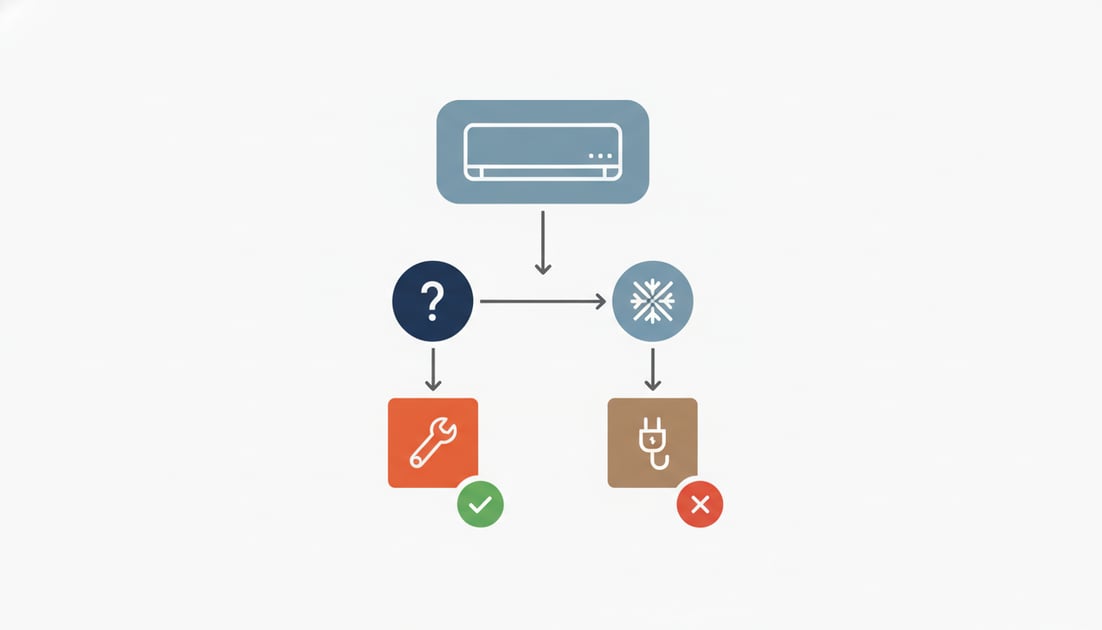
Start with a visual inspection flowchart: Check thermostat settings and display → Verify power supply and breakers → Examine air filters → Inspect outdoor unit → Test system response. Each step either resolves the issue or eliminates a variable, narrowing possibilities efficiently.
Common issues follow predictable patterns. Weak airflow typically indicates clogged filters or blocked vents. Strange noises suggest loose components or debris in the outdoor unit. Water leaks point toward condensate drain blockages. Ice formation on refrigerant lines signals restricted airflow or low refrigerant levels requiring professional attention.
Document your observations – noting specific sounds, visible damage, or error codes helps technicians diagnose faster if you ultimately need air conditioning repair services.
When to stop DIY attempts: Immediately cease troubleshooting if you detect burning smells, see sparking, notice refrigerant leaks (oily residue around connections), or encounter exposed wiring. These situations present genuine safety hazards. Similarly, issues involving refrigerant require certified technicians – handling refrigerants without proper qualifications violates UK regulations and poses environmental risks.
Successful troubleshooting requires honesty about your technical limitations. Homeowners can safely handle filter changes, debris removal, and basic electrical checks. Anything involving refrigerant systems, electrical repairs beyond breaker resets, or internal component access demands qualified professionals. Recognising this boundary prevents equipment damage, personal injury, and voided warranties whilst ensuring your cooling system receives appropriate care.
Know When to Call the Professionals
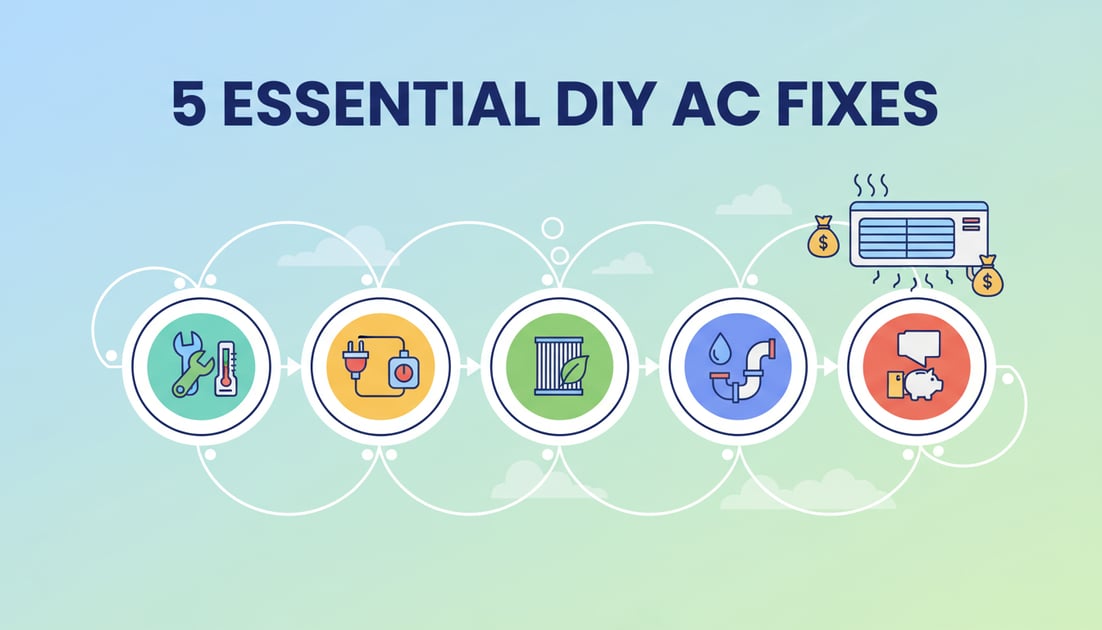
These five essential checks – thermostat verification, power supply inspection, filter replacement, outdoor unit clearance, and drain line maintenance – resolve most common AC issues without professional assistance. Mastering these steps saves you emergency callout fees whilst keeping your system running efficiently throughout summer.
However, certain situations demand immediate expert intervention. Contact Be Cool Air Conditioning straight away if you notice refrigerant leaks (hissing sounds with oily residue), electrical burning smells, continuous circuit breaker tripping, or complete system failure during heatwaves. These scenarios pose safety risks or indicate complex mechanical faults beyond DIY capabilities.
Similarly, refrigerant handling requires F-Gas certified technicians under UK regulations – attempting this yourself risks substantial fines and environmental damage. Water damage spreading beyond your condensate tray, frozen refrigerant lines despite clean filters, or unusual grinding noises also warrant qualified assessment.
If your troubleshooting efforts haven't restored cooling within 30 minutes, professional diagnosis prevents further damage from prolonged operation of malfunctioning components. Modern AC systems contain sophisticated electronics and sealed refrigerant circuits that require specialist equipment for accurate diagnosis.
Regular professional maintenance alongside your DIY checks maximises system lifespan and prevents costly emergency failures. Don't hesitate – when doubt arises about safety or complexity, qualified engineers provide peace of mind and proper solutions.